YouGuang Chinese School was officially founded on October 15, 2022.
At the time, it had no campus of its own, no theatre, no indoor activity space, no YouGuang Night, no original school song, and none of the fully developed curriculum system or brand identity it has today.
The question it faced at the beginning was remarkably simple: How should children growing up overseas learn Chinese?
The question itself was not new. Chinese schools of all sizes had existed in Canada for many years, and generations of Chinese families had grown accustomed to sending their children to Chinese classes on weekends.
But once children were placed in that learning environment, the limitations became clear. A child growing up in Canada spends most of the week in English. English is the language of school, friends, and everyday self-expression. Chinese, by contrast, may occupy only two hours on a weekend.
If those two hours are still dominated by copying characters, memorizing vocabulary, reading textbook passages, completing exercises, and preparing for tests, Chinese can quickly become an extra subject that sits outside the child’s real life.
This was one of the first things YouGuang recognized: Chinese education overseas cannot simply transplant the language-arts model used in China.
The language environment is different. The amount of learning time is different. Children’s cognitive habits are different. Family language backgrounds are different. The textbooks, the classroom, the pace of instruction, and even the answer to the question “Why learn Chinese?” all need to be redesigned.
That is where the YouGuang story began.
1. At the Beginning: Rebuilding the Chinese Class from the Ground Up
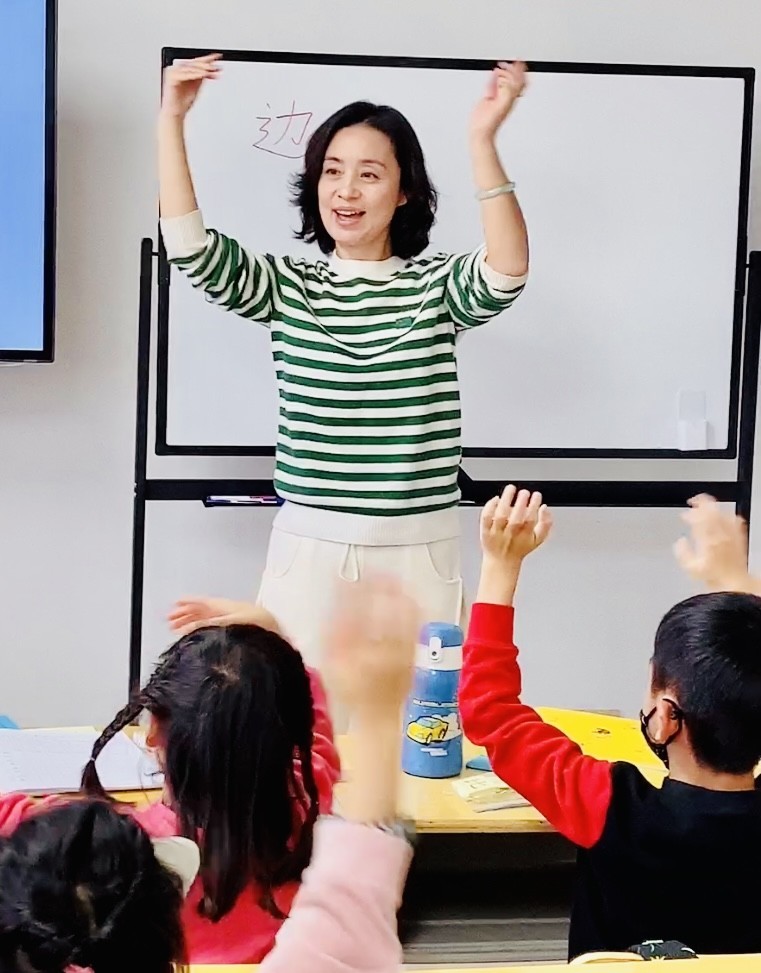
When YouGuang was first established, it did not begin with grand ambitions. The first task was more fundamental: how to teach one Chinese class truly well.
From the outset, YouGuang chose to develop its own teaching materials. This was not about creating a proprietary textbook for its own sake. It was a response to a practical problem: existing materials rarely matched the learning conditions of children growing up in Canada.
Textbooks written for children in China assume that learners are surrounded by Chinese every day. Children overseas do not have that advantage. The same character, word, or passage that functions as a simple knowledge point in a classroom in China may require more repetition, stronger context, and a more deliberate memory pathway for a child overseas.
YouGuang therefore began redesigning character targets, text difficulty, reading progression, and classroom activities. Over time, a basic principle emerged: maintain high standards without sacrificing efficiency; pursue real learning outcomes without sacrificing a child’s willingness to keep learning.
YouGuang later summarized this idea in a simple phrase: Learn Chinese with joy and efficiency.
Joy does not mean lowering expectations. Quite the opposite. A strong classroom is one that protects learning effectiveness while giving children enough engagement and confidence to continue. That requires teachers who understand children, classroom rhythm, attention, and how to make limited instructional time count.
This is why YouGuang placed teachers at the center from the very beginning. The school later developed another straightforward belief: Great teachers are at YouGuang.
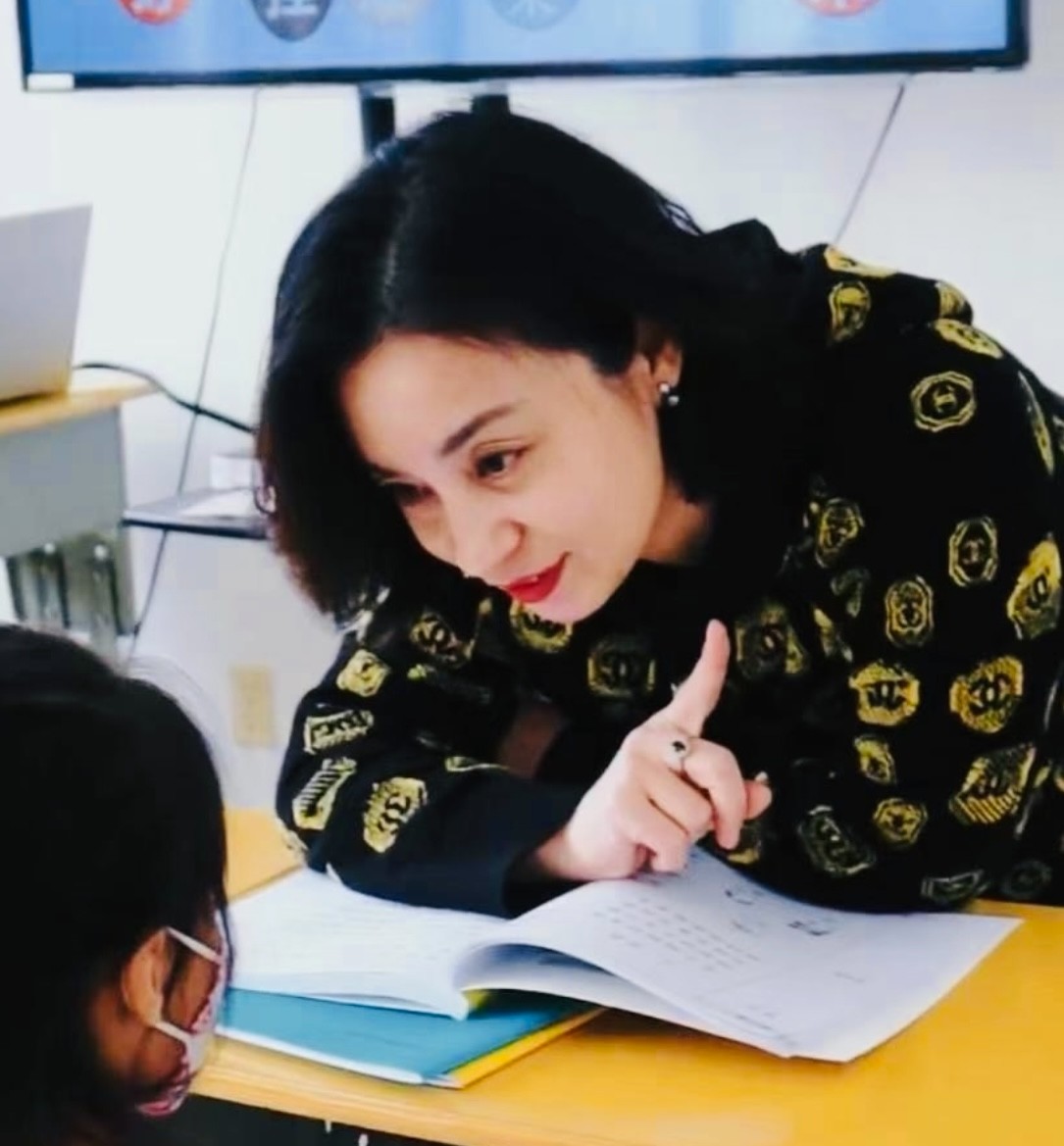
Teaching materials can be developed. Classrooms can be renovated. Equipment can be purchased. But a truly excellent teacher is difficult to replicate. Education ultimately happens not in a brochure or in a grand statement of philosophy, but in the two hours when a teacher is standing in front of a child.
2. Character Recognition Is the Beginning, Not the Destination
In overseas Chinese education, character recognition remains an unavoidable threshold. A child who cannot recognize enough characters will struggle to enter independent Chinese reading. Without reading, Chinese proficiency can easily remain limited to conversational language used at home.
For that reason, YouGuang has always taken literacy seriously. But as its teaching developed, the school became increasingly clear about one point: recognizing characters cannot be the final goal.
Knowing a character is not the same as possessing the language. Real Chinese ability means being able to understand a text, follow a story, organize ideas, and express opinions and feelings.
YouGuang’s curriculum therefore evolved from a focus on character recognition toward a broader progression: literacy, reading, and expression. Its in-house materials continued to be revised, an online homework system was gradually established, and learning began to extend beyond the classroom.
The school is not interested only in how many characters a child learns in a year. The more important question is whether that child can eventually cross the threshold into independent reading.
Once a child can read, Chinese is no longer a textbook opened for two hours on the weekend. Books, stories, history, people, and culture begin to enter the child’s world.
What YouGuang ultimately wants to build is a Chinese ability that continues to grow. Not simply to have studied Chinese, but to truly have Chinese.
3. From Language Learning to the Ability to Express
As the school grew, YouGuang began paying greater attention to another question: Can children actually use Chinese?
Traditional Chinese education often treats reading and writing as its primary targets. For children overseas, however, YouGuang found that expression is especially important.
Can a child stand in front of others and tell a story? Can they introduce an experience in a complete and coherent way? Can they express a point of view? Can they stand on a stage and deliver something meaningful in Chinese?
These abilities are not the same as test scores. That is why drama, hosting, and public speaking gradually became part of YouGuang’s educational system.
Drama became an especially important vehicle. Children in a drama class are not there simply to become actors. They must understand a character, remember lines, control their voices and movements, cooperate with others, and face an audience. Behind all of these abilities is the active use of language.
A sentence memorized ten times from a textbook may soon be forgotten. But a line spoken by a child onstage, under lights, in front of an audience can become an entirely different kind of memory.
Language shifts from knowledge into lived experience. That is why Youguang has increasingly treated drama as an important part of Chinese education.
4. From the Classroom to the Stage: The Birth of YouGuang Night
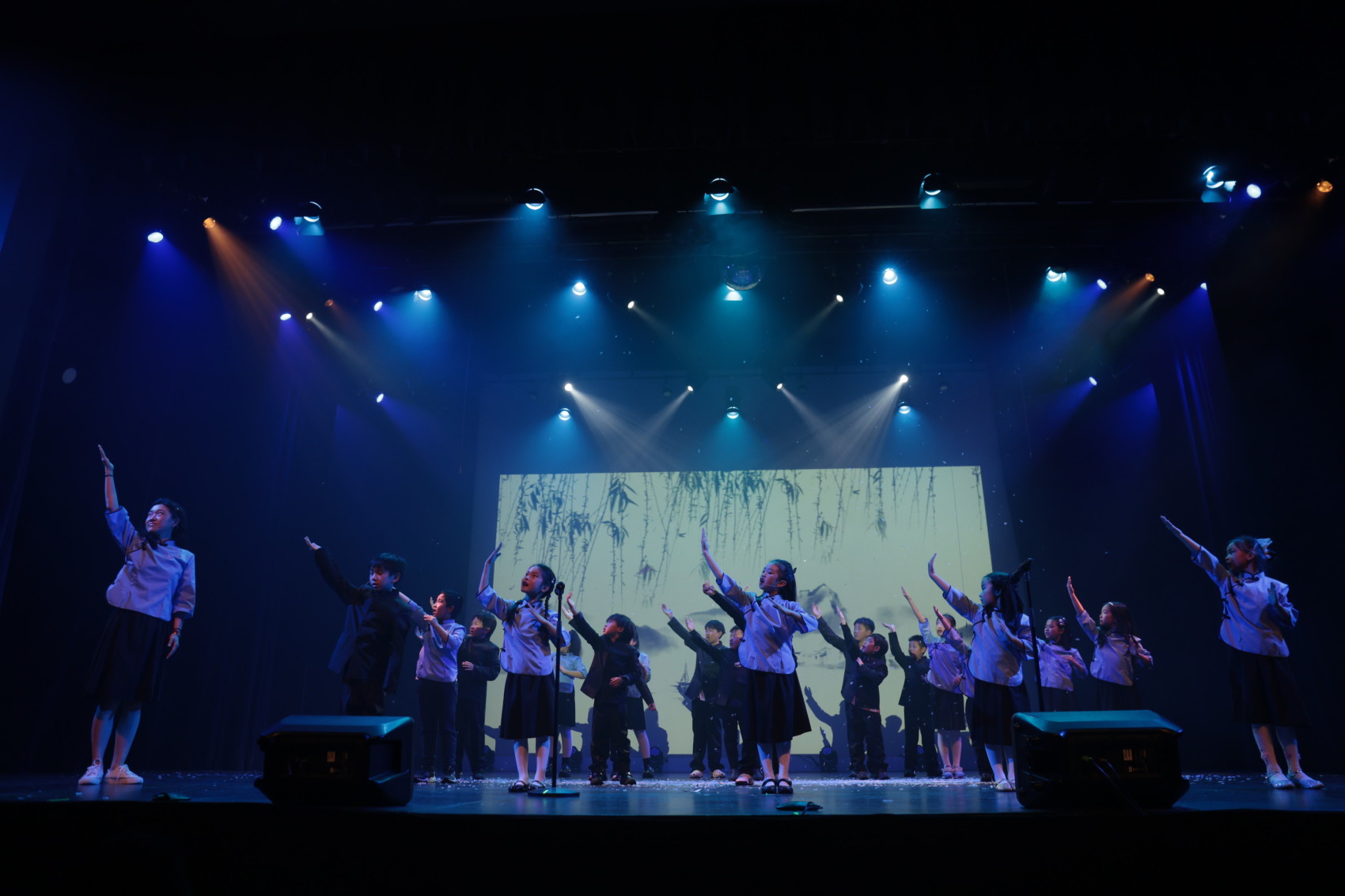
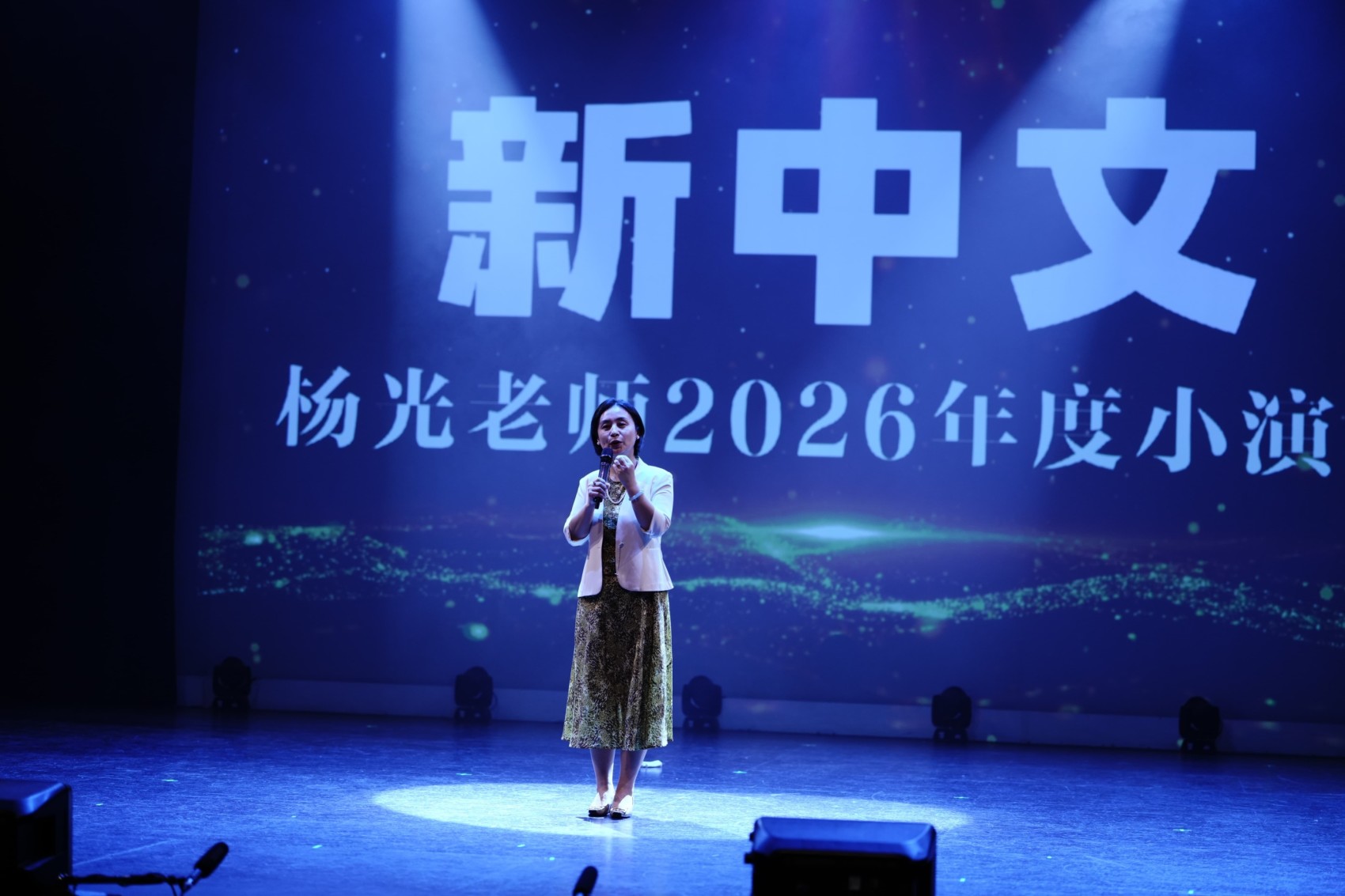
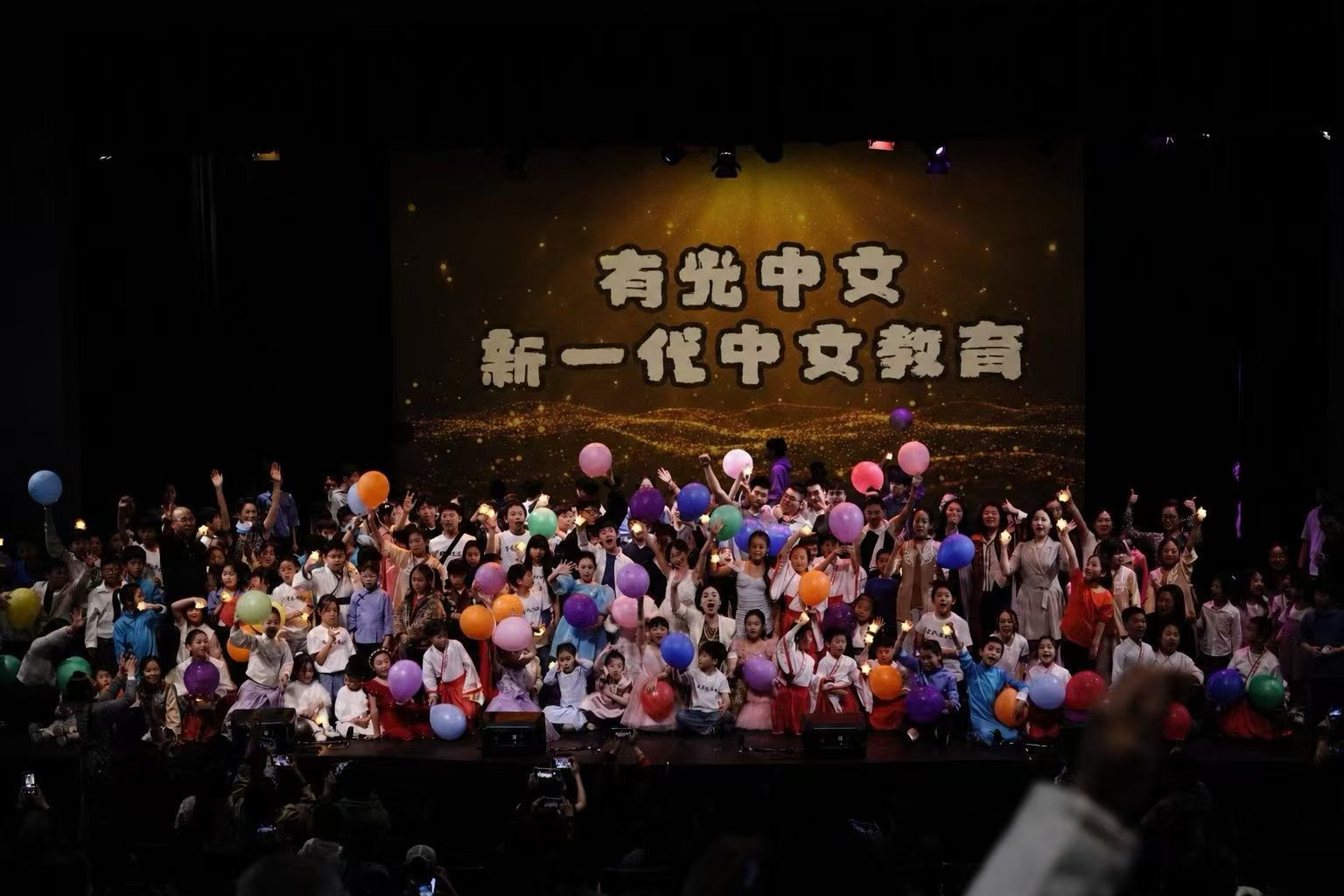
In 2024, YouGuang held the first Youguang Night. Since then, it has grown into the school’s annual large-scale student showcase.
Students are brought into a professional theatre, where lighting, sound, stage management, hosting, and program design are treated with the seriousness of a formal production.
People have asked why a Chinese school would invest so much time and effort in a performance. If the purpose were simply to create excitement, there would be little reason to do so. But Youguang sees the stage differently: the stage is part of education.
Many forms of growth cannot be gained while sitting at a desk. A quiet child steps into the center of a stage for the first time. A child afraid to speak loudly holds a microphone. A child whose Chinese is not yet fluent completes a performance in Chinese. A very young child faces hundreds of eyes and does not step away.
Those moments are growth in themselves.
Over time, YouGuang Night came to embody one especially important idea: let every child be seen.
The stage should not belong only to the most accomplished, the most outgoing, or the most naturally talented performers. Ordinary children deserve the chance to stand under the lights too.
Education is not only about pointing out where a child still needs to improve. It should also create repeated opportunities for a child to discover: I can do this.
5. A School Song Is Also a Form of Education
As YouGuang developed, it began to form a culture of its own. Its original school song, A Good Child Has Light, is one expression of that culture.
For a Chinese school, composing an original school song may not seem essential. But Youguang increasingly came to believe that a school cannot be made of class schedules alone.
An educational institution that hopes to remain in a child’s life for many years should have its own memories, rituals, and culture: a song sung together, an annual performance everyone looks forward to, a familiar classroom, and a stage that belongs to the school itself.
These things may not directly raise a test score. Years later, however, they may become part of a child’s memory of childhood, of Chinese, and even of cultural identity.
Perhaps this is one of the differences between a school and a tutoring center. A tutoring center delivers courses. A school creates a period of life that people have shared together.
6. In 2026, YouGuang Gained a Campus of Its Own
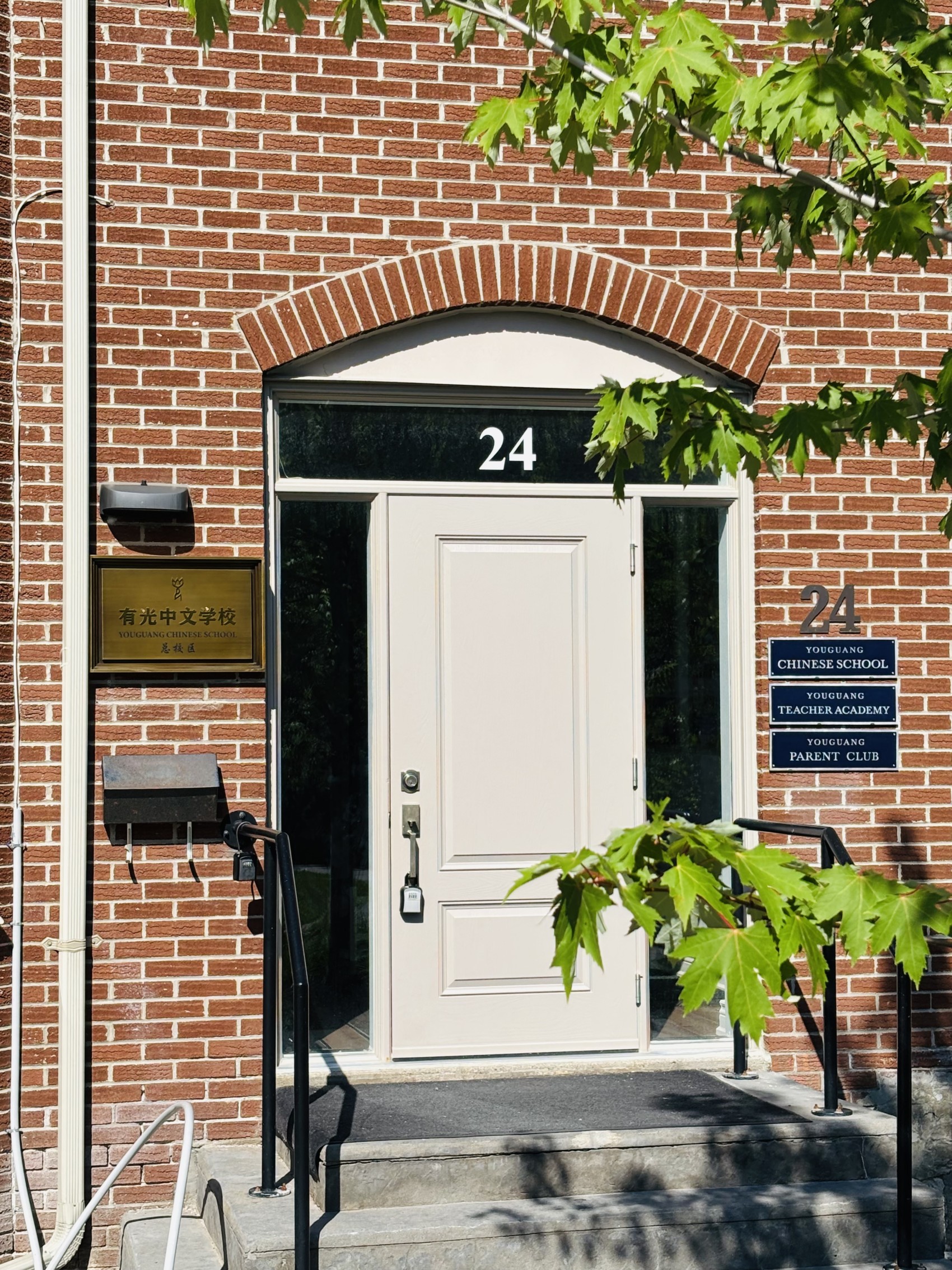
The year 2026 marked an important turning point in YouGuang’s development. On March 2, the school officially acquired its own approximately 5,000-square-foot main campus in Richmond Hill.
For a Chinese school less than four years old, this was a significant decision. Renting a classroom allows an organization to think one year at a time. Buying a campus of its own requires a completely different time horizon.
From that moment, the question was no longer simply, “Where will we teach next year?” It became, “What should this place become ten years from now?”
With its own campus, many ideas that had previously been difficult to realize could finally take physical form. The school could redesign space, build its own theatre, create an indoor activity area for children, and decide how the environment should be used according to educational needs rather than a landlord’s restrictions.
In the past, every new idea first had to pass through practical questions: Is the venue allowed to do this? Is there enough space? When can we use it? With a campus of its own, the question changed to: What kind of space is genuinely right for children?
The real significance of the campus is not that YouGuang owns a building. It is that YouGuang can now design educational space around its own philosophy over the long term.
7. From Classrooms to a Theatre and an Indoor Activity Space
Traditional Chinese-school facilities are often simple: classrooms, desks, chairs, and a whiteboard. It can seem as though Chinese classes require little more.
But once YouGuang began rethinking what Chinese education could mean, a new question emerged: if children are expected not only to recognize characters but also to read, express themselves, perform, collaborate, and move, should the school environment change as well?
New spaces gradually appeared at YouGuang’s main campus. The school theatre gives children a place to rehearse, host, and perform. The indoor activity space gives them room for movement, games, and broader developmental activities. During summer camp, classroom learning, drama, sports, and cultural activities can all take place within one integrated campus environment.
This reflects a visible shift in YouGuang’s educational philosophy. The school is evolving from a place where children come to take Chinese classes into an educational environment designed around the broader development of the child.
Chinese remains the core, but it is no longer isolated inside the textbook. Chinese can happen on a stage, in a game, at a children’s marketplace, in a tai chi class, on a farm visit, or in another authentic life experience.
When language enters life, language becomes alive.
8. From Teaching Chinese to Educating Children
Over the past several years, YouGuang has increasingly moved away from thinking of itself simply as a language-training organization.
The reason is straightforward. During the years a child spends at Youguang, far more happens than learning a set of Chinese characters.
A child may step onto a stage for the first time. Host a program for the first time. Complete a play for the first time. Speak coherently in front of strangers for the first time. Take part in a major group performance for the first time. Encounter culture, history, and tradition through Chinese for the first time.
These experiences shape a child.
That is why YouGuang gradually began asking a different question: If this is truly a school, what should it leave with a child?
The answer is clearly more than textbooks. It should leave ability. Memory. Culture. Confidence. And a new understanding of oneself.
9. The YouGuang Question: What Would I Do If This Were My Child?
As the school grew, YouGuang began facing a challenge common to every educational organization: when the founders cannot personally be present in every classroom, how can the school preserve its original standards?
Systems matter. Teacher standards matter. Classroom procedures matter. But education contains countless situations that no policy can fully anticipate.
What should a teacher do when a child is upset that day? When two children have a conflict? When a child with a weaker foundation continually falls behind? When a child suddenly begins to cry?
There is often no single standard answer.
YouGuang therefore developed a very simple question: “What would I do if this were my child?” The school calls it the YouGuang Question.
It is not complicated, but it has become one of the school’s most important educational principles. When teachers, administrators, and the school itself pause to consider a situation from a parent’s position, many choices become clearer.
At its core, education is ultimately a responsibility to the individual child standing in front of us.
10. Beyond Language Is Culture; Beyond Culture Is Identity
For children growing up overseas, learning Chinese has never been only a language question. It is also a cultural question.
A child raised in Canada may receive a complete education in English and eventually live and work in an English-speaking society. What, then, can Chinese mean in that child’s life?
Chinese can be a language, but it can also be a key. Through it, a child can read a writing system, understand history, enter a cultural tradition stretching back thousands of years, and maintain a deeper connection with parents, grandparents, and the wider Chinese-speaking world.
For that reason, YouGuang has placed increasing emphasis on cultural experience: tai chi, guzheng, drama, traditional etiquette, Chinese stories, festivals, stage performance, reading, and more.
The goal is not to turn children into specialists in traditional culture. It is to make “Chinese culture” something more than an abstract phrase. Children should be able to touch it, experience it, and remember it.
Culture can become part of a person only when it connects with real life.
11. From Mandarin-Speaking Homes to Non-Mandarin Homes
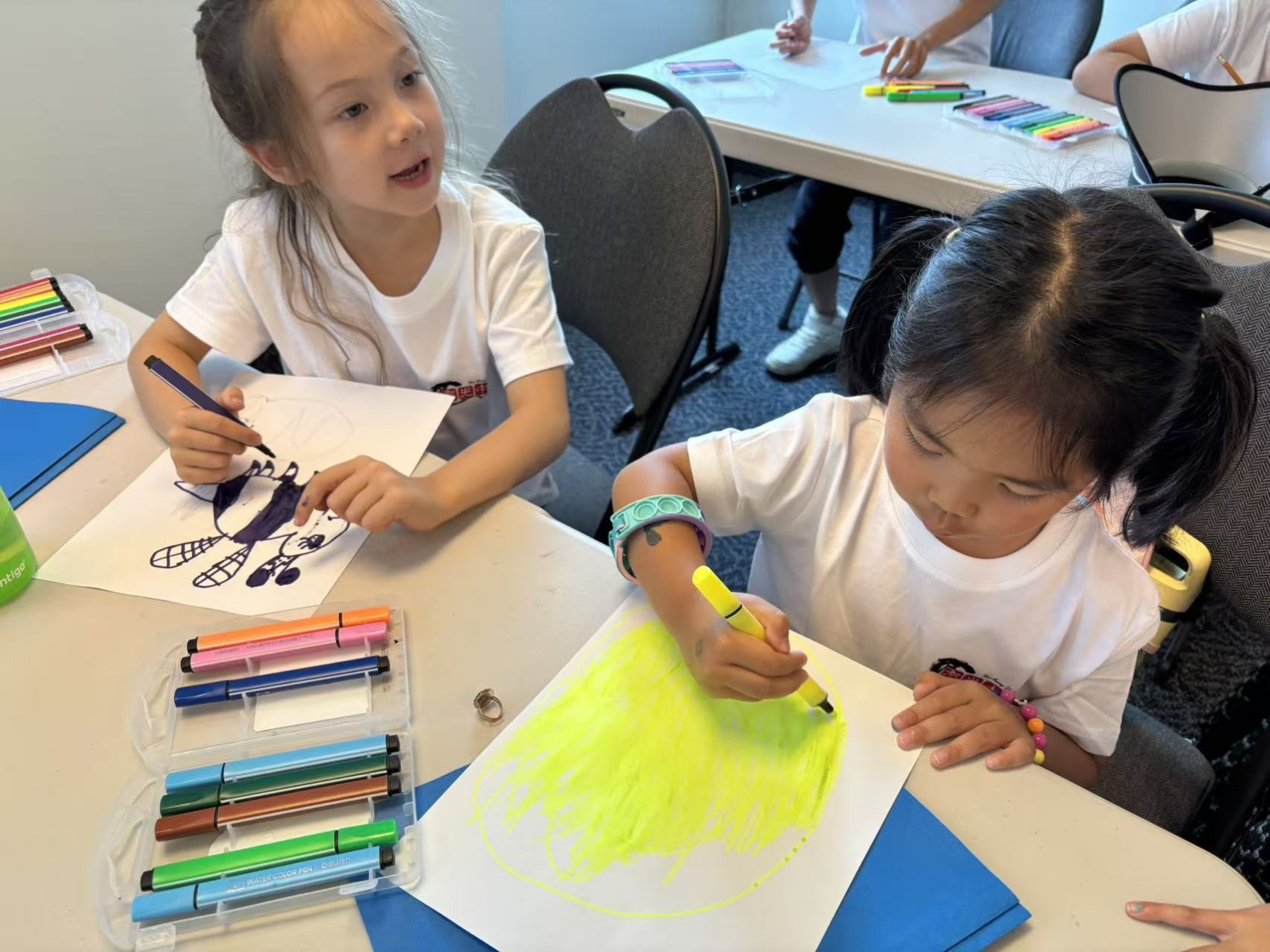
Most of YouGuang’s earliest students came from Mandarin-speaking families. As the school developed, however, another group became increasingly important: children whose families do not speak Mandarin at home.
Some come from Cantonese-speaking homes. Some come from bilingual Chinese-English homes. Others come from families where Chinese is not spoken at all.
These children begin from fundamentally different conditions. A child who has understood Mandarin since early childhood cannot follow the same learning pathway as a child encountering Mandarin for the first time in the classroom.
YouGuang therefore began redesigning courses specifically for children from non-Mandarin-speaking homes. Teaching methods, language input, classroom pace, and course content all need to be adjusted.
This shift has also encouraged the school to build a more complete English-language website and English content system.
Behind this change is a broader direction: Chinese education should not be limited to children from Chinese-speaking families. Chinese can be a heritage language, but it can also be a true world language.
YouGuang hopes to serve more families from a wider range of language backgrounds in the years ahead.
12. How the Idea of a New Generation of Chinese Education Took Shape
When YouGuang was founded, it did not yet use the phrase “A New Generation of Chinese Education.” The idea emerged gradually after several years of practice.
The school came to realize that what it was building could no longer be fully described by the conventional idea of a Chinese school.
Character recognition matters. Reading matters. Expression matters. Drama matters. Cultural experience matters. The learning environment matters.
These are not unrelated programs. They all respond to the same question: How can a child growing up overseas truly keep Chinese as part of life?
That is how “A New Generation of Chinese Education” became one of YouGuang’s most important expressions of its brand and philosophy.
The word “new” does not mean rejecting tradition. On the contrary, Chinese characters, reading, and fundamental language skills remain the foundation.
What is new is the recognition that the environment in which overseas children grow up has changed, and therefore the way Chinese is taught must change as well.
Chinese cannot remain only a class. It should connect with reading, expression, the stage, culture, real life, and even a child’s confidence.
YouGuang does not simply hope to produce children who earn good Chinese grades. It hopes to nurture children who can genuinely use Chinese, understand culture, express themselves with confidence, and carry that confidence into the world.
13. From a Name to a Brand
As the school continued to develop, YouGuang gradually became more than a school name. It became a more complete brand.
The Chinese name: 有光. The English name: YouGuang. The new official domain: youguang.com. An original school song. The annual YouGuang Night. In-house textbooks. An educational philosophy. A campus environment.
These elements may appear separate, but over time they have begun to form a coherent brand system.
In August 2026, YouGuang officially began using youguang.com. A domain name is, technically, only an internet address. For a long-term educational brand, however, it is also a meaningful brand asset. 有光, YouGuang, and youguang.com now form a more unified identity.
A real brand has never been only a logo. It is the full set of experiences, impressions, and trust that people recall when they see the name YouGuang.
That trust cannot be built quickly. A set of teaching materials takes years of revision. A teaching team takes years to develop. A campus takes years to form its culture. An annual performance requires generation after generation of students to leave memories behind. An educational brand requires even more time.
14. Slowness Is Part of Education
There are many ways to expand quickly in education: open new locations rapidly, franchise rapidly, and grow enrollment rapidly.
But over the past several years, YouGuang has become increasingly certain of something else: education has its own pace.
A teacher needs time to grow. A curriculum needs time to be tested. A campus needs time to earn trust. Most importantly, a child needs time to grow.
YouGuang therefore does not want speed purchased at the expense of educational quality. It has chosen to develop its own curriculum, train its own teachers, build its own stage, create its own school song, purchase its own property, and build its own brand.
All of these things take time. From a short-term business perspective, some may not even seem efficient.
But the educational assets with the deepest value are often precisely the ones that cannot be built quickly.
Long-term thinking at YouGuang is not an abstract slogan. It becomes concrete in a textbook, a classroom, a rehearsal, a teacher, a campus, and a child.
15. What Really Changed at YouGuang from 2022 to 2026
Looking back to October 15, 2022, the day YouGuang was founded, it would have been difficult to imagine that only a few years later the school would have its own curriculum system, its own textbooks, its own online learning platform, its own school song, its own annual stage production, its own theatre, its own indoor activity space, its own campus, its own brand system, and an increasingly clear philosophy of a New Generation of Chinese Education.
But if all of this is understood simply as “the school got bigger,” the most important change is missed.
The real change over these years is that YouGuang has become increasingly clear about what kind of school it wants to be.
The first question was: How do we teach Chinese well? Then it became: How do we help children want to keep learning Chinese over the long term? Later it became: How do we help children truly have Chinese?
Today, YouGuang is asking an even larger question: What can an overseas Chinese school leave in a child’s growth?
Those questions, one after another, have pushed YouGuang to where it is today.
16. Let Chinese Remain Part of a Child’s Life
Perhaps one day a child will leave YouGuang. The child may no longer remember a particular textbook passage or a particular homework assignment.
But they may remember the first time they stood at the center of a stage. They may remember rehearsing a play with classmates, the nervousness when the theatre lights came up, everyone singing the school song together, or a teacher who listened patiently as they finished a sentence in Chinese.
They may also remember that Chinese once opened the door to an entirely different world.
If, many years later, that child still wants to read Chinese, can still speak Chinese with family, is still willing to pass Chinese on to the next generation, and still knows that there is a real connection between themselves and a language, a culture, and a history, then perhaps this education has fulfilled its most important purpose.
From October 15, 2022 to today, YouGuang has existed for less than five years. In that short time, it has grown from a single Chinese classroom into a school with its own campus, stage, curriculum system, and educational philosophy.
Yet on the timescale of education, this is still only the beginning.
YouGuang does not aspire to become a tutoring organization that expands as quickly as possible. It hopes to build a school that children remember, parents trust over the long term, and generations of families can rely on for many years to come.
The name YouGuang—literally, “there is light”—contains an expectation of its own: let there be light in a child’s eyes, light in the classroom, and light in education.
And for children learning Chinese far from the places where the language is spoken every day, may that light remain with them as they grow, helping them find their way back to their language, their culture, and where they come from.
This is what YouGuang has come to understand more clearly from 2022 to today: the most important purpose of Chinese education is not to make sure a child has studied Chinese. It is to make Chinese a genuine part of that child’s life.
Author: Yifan Gao, PhD in Chinese Language and Literature, Co-Founder & Principal of Youguang Mandarin School.