Many families first discover YouGuang through a single class.
Perhaps a child comes home and suddenly starts singing a Mandarin song. Perhaps a child who once resisted speaking Mandarin begins trying to express an idea in a complete sentence. Or perhaps parents notice that a child who used to dread Chinese class is now looking forward to coming to school on the weekend.
Others first encounter YouGuang through a performance.
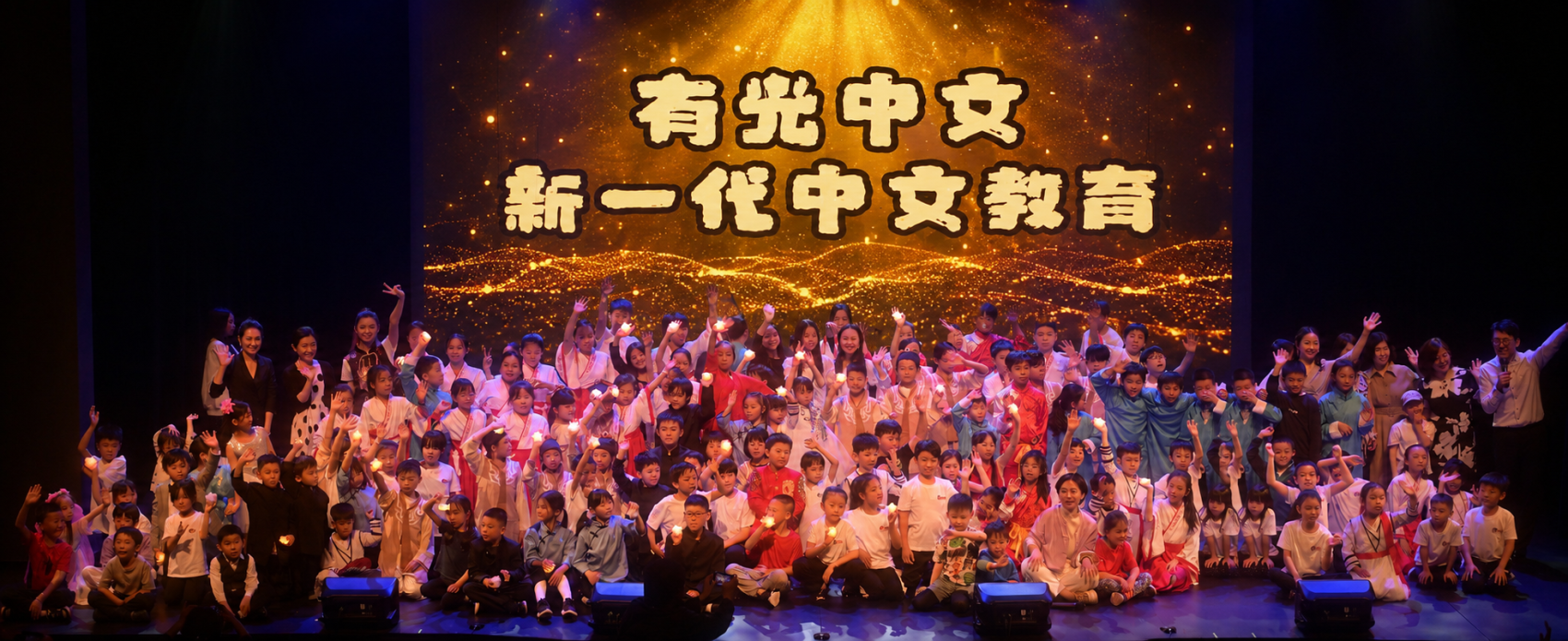
A child stands under the stage lights, facing an audience, telling a story, playing a role, and expressing emotion in Mandarin. In that moment, parents see something beyond character recognition or textbook reading. They see whether their child has the courage to step forward, the ability to express themselves, and the confidence that grows through practice.
Some families come to know us through our textbooks, a school event, summer camp, or a parent review.
But if someone asks us:
What kind of school does YouGuang ultimately want to become?
The answer cannot simply be: "We teach children Mandarin."
From the day YouGuang was founded, our goal has never been merely to become another weekend Chinese school where children learn characters, practise writing, and complete homework.
We want to build a school that truly understands children, respects how education works, and values long-term growth.
We want to build a school where Mandarin becomes a pathway to culture, expression, confidence, and inner strength.
And we want to explore new possibilities for what Mandarin education can become for children growing up overseas.
Ultimately, we hope YouGuang can become a place where children discover a larger world through Mandarin—and become stronger, more complete versions of themselves through their time at YouGuang.
1. First, We Want to Build a Real School
There are many Chinese classes and educational programs overseas.
But to us, offering a collection of classes and building a school are not the same thing.
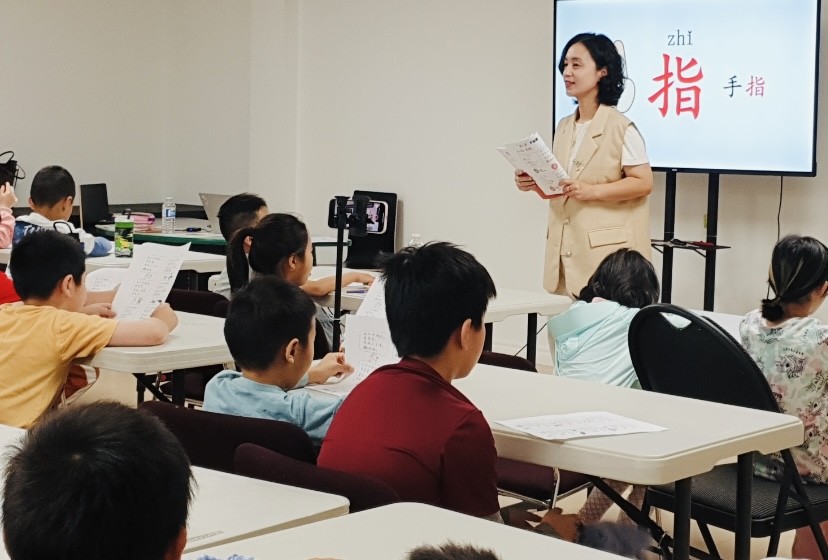
A real school needs clear educational goals, a coherent curriculum, a stable teaching team, consistent academic standards, and a sense of responsibility for each child's long-term development.
It cannot depend entirely on the personal experience of one teacher.
Different classes should not operate as completely separate worlds. The curriculum should not change direction every year. And a school cannot think only about how many students are enrolled today without considering what those students should be capable of several years from now.
That is why YouGuang has never seen itself as a temporary enrichment program.
From the beginning, we have been building our own curriculum and teaching materials.
From our foundational program through Level 1, Level 2 and higher levels, we carefully consider which characters children should learn, which vocabulary they should develop, and what reading and expressive abilities they should acquire at each stage.
After several years at YouGuang, we want parents to clearly understand: What has my child learned? Where are they now? And where are they going next?
That sense of continuity is one of the basic commitments a school should provide to families.
Of course, having a curriculum does not mean teaching every child in exactly the same way.
Children have different language backgrounds, personalities, learning speeds, strengths, and challenges.
Some children speak Mandarin confidently but have limited literacy. Some recognize many characters but hesitate to speak. Some think quickly but struggle to maintain attention. Others are quiet and cautious and simply need more encouragement and time.
Professional teaching means working toward shared learning goals while still being able to see the individual child and adjust accordingly.
Education is not about distributing the same knowledge equally to everyone.
Education is about recognizing differences and helping each child move forward.
This is the first kind of school we want YouGuang to be: systematic in curriculum, serious about teaching, responsible in management—and always able to see the child.
2. Character Recognition Is Not the Final Goal
Character recognition is essential in overseas Mandarin education.
Without sufficient literacy, children struggle to enter the world of Chinese reading. And without reading, Mandarin can easily remain limited to everyday family conversation.
A child may understand phrases such as "time to eat," "go to sleep," or "hurry up," but still be unable to read a complete story or use Chinese to access deeper knowledge and culture.
That is why YouGuang places strong emphasis on literacy.
Our foundational classes have clear annual character-learning goals, and students at Level 1 and above continue through a structured and consistent literacy program.
But we have always believed: Recognizing characters is not the destination. It is a tool.
A child does not learn a character simply to write it correctly in a dictation exercise or answer a question on a test.
The real value of literacy is that it enables reading.
The real value of reading is that it opens the door to stories, history, literature, ideas, and different ways of understanding the world.
And ultimately, all of these experiences help children understand both the world around them and themselves.
At YouGuang, we often think of Chinese characters as keys.
One character connects to many words. Words form sentences. Sentences become stories. And stories can take a child into lives and worlds they have never experienced before.
We also describe literacy as a lever.
The lever itself is not the destination. But once a child knows how to use it, something very small can open a world far larger than the classroom.
So we never measure educational success only by asking: How many characters does this child know?
We also ask: Can they read? Can they understand what they read? Can they retell it? Can they express their own ideas in Mandarin? Can they use what they have learned in a new situation?
If a child recognizes hundreds or even thousands of characters but has no desire to read, lacks confidence in expression, and sees no connection between Mandarin and their own life, then something is still missing.
We want to develop children who can use Mandarin, not simply children who can complete Mandarin exercises.
3. We Want Children to Learn Well—and Enjoy Learning
Mandarin education is sometimes framed as a choice between two goals: academic results or enjoyment.
Some classrooms focus heavily on results while overlooking the child's experience. Children copy, memorize, recite, and practise repeatedly. They may remember more in the short term, but over time they may also become increasingly resistant to Mandarin.
Other classrooms move too far in the opposite direction. Requirements are continually lowered in order to keep children happy. The classroom may be lively and entertaining, but years later the child may still lack meaningful reading and expressive ability.
We believe neither approach is complete.
A good Mandarin classroom should not force parents to choose between learning well and enjoying learning.
Children should accomplish real learning through engaging experiences, and they should develop more lasting motivation because they can see their own genuine progress.
Interest is not simply laughter in the classroom.
The deepest form of motivation often comes from growing ability.
A child realizes that a sentence that once looked impossible can now be read.
Something they once could not explain can now be expressed clearly.
A stage they once feared can now be stepped onto with confidence.
From those experiences comes something more durable than entertainment: a sense of achievement.
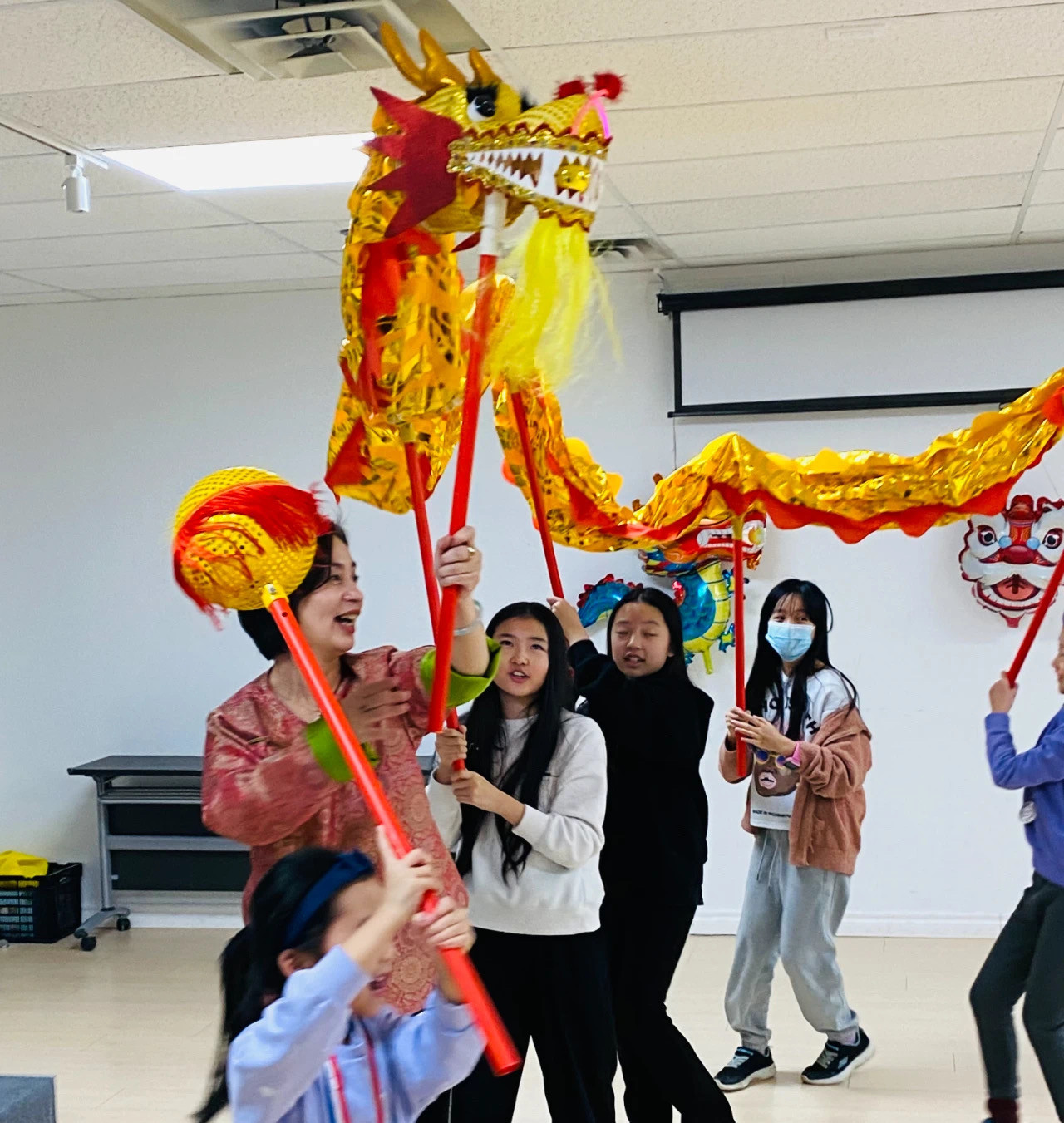
At YouGuang, we use stories, games, competitions, performance, and interactive activities not to avoid serious learning, but to make practice better aligned with how children think, engage, and sustain attention.
Games are a teaching method, not the goal.
Enjoyment can fuel learning, but it cannot replace the development of real ability.
We want children to enjoy coming to YouGuang.
And we also want them to genuinely learn while they are here.
Those goals have never been contradictory.
4. We Want to Bring Mandarin from the Textbook to the Stage
At YouGuang, drama, hosting, public speaking, and stage performance are not extracurricular additions to language learning.
They are part of language education itself.
A language becomes a genuine ability only when it is used.
Learning a sentence from a textbook and speaking that same sentence before an audience are entirely different experiences.
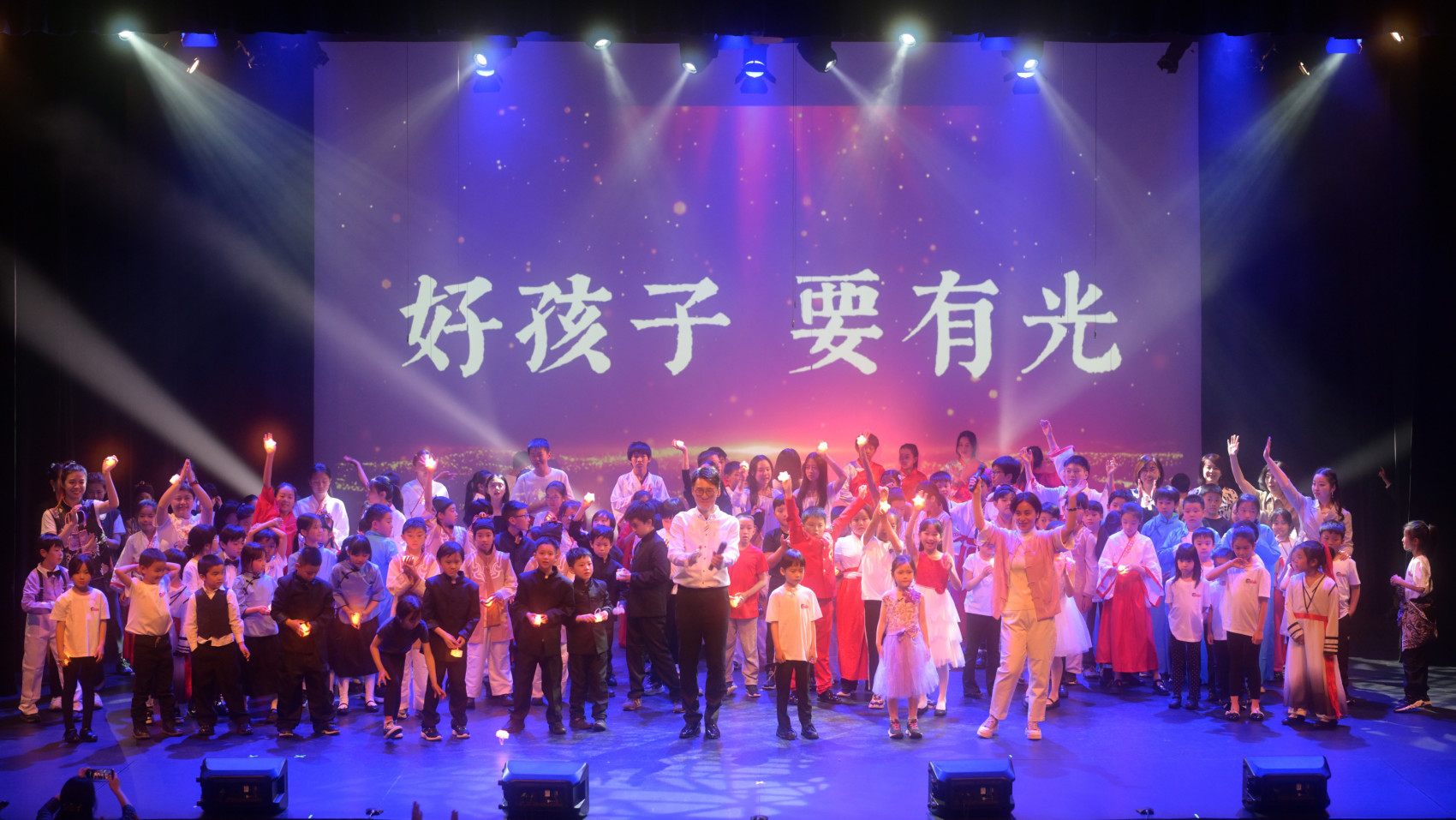
On stage, a child must understand the meaning of the lines, control their voice, adjust rhythm and pacing, observe others, respond in real time, and manage nervousness.
They are learning Mandarin. But they are also learning communication, cooperation, responsibility, and courage.
Some children are quiet in a traditional classroom but become unexpectedly expressive once they enter a role.
Some initially struggle to look at an audience but gradually raise their heads after repeated rehearsals.
Others finish a performance and discover for the first time: I can do something I never thought I could do.
These changes may never appear on a test score. But they may remain with a child for years.
When we built the YouGuang Theatre, our goal was not simply to have a place for performances.
We wanted the stage itself to become part of education.
The classroom helps children acquire knowledge. The stage helps them use it.
The classroom develops language. The stage can transform that language into confidence and strength.
A complete Mandarin education should include both input and output.
Children need to recognize characters and read, but they also need to tell stories, discuss ideas, perform, and create.
They should not only understand other people's language. They should gradually discover their own voice.
We do not want to educate children who only lower their heads and complete assignments.
We hope that one day they can lift their heads, face others, and express themselves clearly, confidently, and with conviction.
5. We Want Mandarin to Become a Bridge to Culture
For children growing up in Chinese families overseas, Mandarin has obvious practical value.
It can help them communicate with grandparents, connect more naturally with relatives when visiting China, and better understand their own names and family histories.
But the value of Mandarin should not stop at convenience.
Behind every language lies a civilization.
When a child develops genuine Chinese literacy, they gain access to far more than everyday conversation.
They can encounter poetry, history, mythology, literature, philosophy, and generations of human experience.
Over time, they may begin to understand that words and ideas such as family, homeland, friendship, responsibility, li, and yi are more than dictionary definitions. They carry meanings shaped by centuries of culture and human experience.
Children growing up overseas naturally live between cultures.
That does not need to be a source of confusion. It can become an extraordinary advantage.
They can read Shakespeare and understand Li Bai.
They can be deeply familiar with Canadian society and its values while also understanding Chinese ideas about family, responsibility, and continuity across generations.
They should not be forced to choose between cultures.
Good education can help them draw strength from both and develop a broader, more independent view of the world.
For this reason, cultural education at YouGuang is not reduced to symbols.
Children certainly encounter festivals, poetry, calligraphy, drama, music, and traditional culture.
But more importantly, we want those experiences to connect with their understanding and their lives.
Culture is not simply wearing traditional clothing once a year. Nor is it memorizing historical names.
Culture gives children additional ways to understand the world and additional resources with which to understand themselves.
We hope Mandarin can ultimately become a bridge: one end connecting children with their families and where they come from, and the other opening toward a much wider world.
6. We Want Every Child to Be Taken Seriously
One of the easiest phrases in education is: "Everything we do is for the children."
Actually living by that principle is much harder.
Because truly putting children first means a school cannot look only at overall numbers. It must also see the individual.
Every child arrives with a different personality, foundation, interest, challenge, and expectation.
Some progress quickly. Some need more time. Some enjoy competition. Some fear making mistakes. Some need greater academic challenge. Others first need to feel secure enough to participate.
We do not want a child who is temporarily behind to be labelled "lazy" or "not talented."
Nor do we want a stronger student to stop growing simply because they can already complete the basic requirements.
A teacher's responsibility is to see both the class and the individual child.
This is one reason YouGuang keeps class sizes limited, values teacher-parent communication, and expects teachers to understand each student's actual learning progress.
Parents should know more than: "My child had class today."
They deserve to know what their child learned, what they understand, where they are struggling, and what progress deserves recognition.
Communication is not an administrative task outside education. Communication is part of educational responsibility.
A trustworthy school is not a school where problems never occur.
It is a school that faces problems when they occur, communicates promptly, and takes responsibility for resolving them.
We cannot promise that every child will be in exactly the same emotional or academic state in every class.
But we can commit to something more fundamental: every child should be seen, and every reasonable concern from a parent should be taken seriously.
7. We Want to Build a Truly Professional Teaching Team
The quality of a school ultimately depends on its teachers.
Even the best educational philosophy means little if it never reaches the classroom.
That is why our expectations for teachers at YouGuang go far beyond simply "speaking Mandarin."
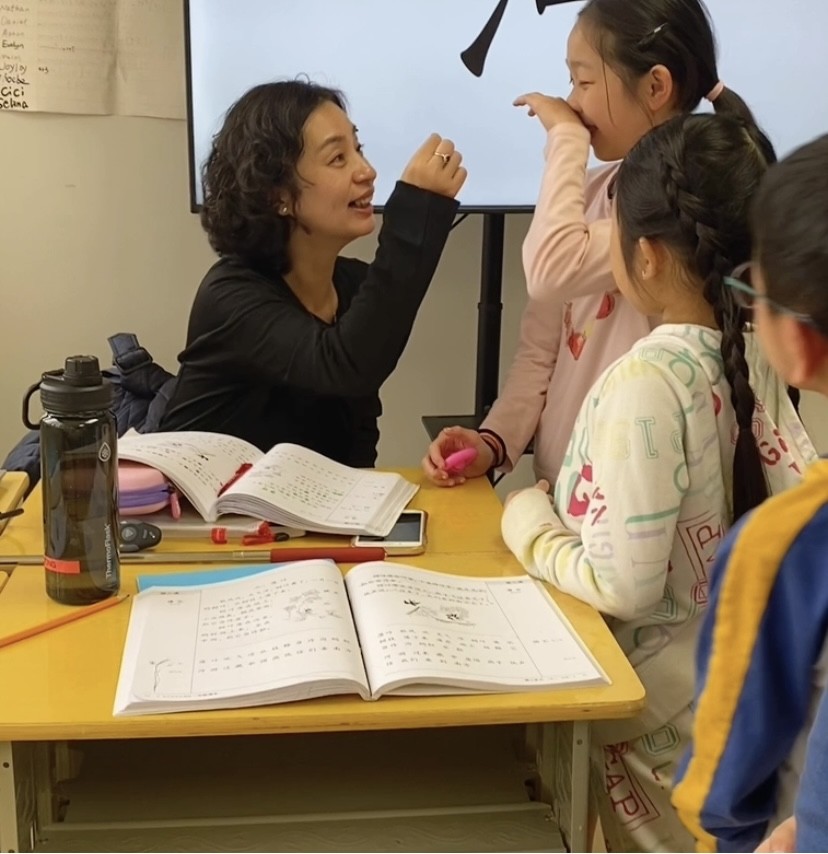
An excellent Mandarin teacher must understand language and understand children.
They need to manage classroom rhythm while observing individual students.
They need to prepare carefully, provide timely feedback, and remain willing to learn and improve.
More importantly, they need to believe deeply in the value of education.
Children can tell the difference between a teacher who is simply completing a task and one who genuinely cares about their growth.
Many of the most important influences in education happen through small moments.
A child gives the wrong answer, and the teacher responds without making them feel embarrassed.
A child is afraid to go on stage, and the teacher gives them another opportunity.
A homework assignment shows only modest improvement, but the teacher still notices the effort behind it.
These moments shape how children feel about learning. They also shape how children see themselves.
We therefore want YouGuang to be not only a school where students grow, but also a school where teachers continue to grow.
The future role of the YouGuang Teacher Academy is not merely to train classroom techniques.
We hope to develop a professional system that encompasses curriculum, classroom practice, child development, expression education, and teacher responsibility.
A teacher who joins YouGuang should gradually become a deeper educator and increasingly capable of helping children.
The lasting competitive advantage of a school is not its decoration. It is not advertising. It is not short-term enrolment numbers.
It is culture, standards, and the professional tradition built collectively by generation after generation of teachers.
8. We Do Not Want to Become a School That Pursues Scale at Any Cost
Of course we want YouGuang to grow.
We hope more children will come to Youguang, and perhaps one day YouGuang will be present in more communities where Chinese families live.
Our vision is: Wherever there are Chinese families, may there be YouGuang.
But growth should never come at the expense of educational quality.
If a school enrols more students but begins to lose sight of individual children; if it opens more campuses but can no longer maintain consistent teaching quality; if revenue grows while the seriousness and responsibility that shaped the school at the beginning gradually disappear—that is not our definition of success.
We hope YouGuang can become a meaningful education brand with scale. But first, it must remain a good school.
Scale must be built upon quality. Quality should never be sacrificed for scale.
We are willing to move more slowly if that means building the curriculum properly.
We are willing to operate fewer campuses if each one can earn the trust of families.
We do not need explosive short-term enrolment growth if every family who enters YouGuang can genuinely feel that the school takes education seriously.
Education is a long-term undertaking.
There are no shortcuts to a child's growth. There are no shortcuts to building a school either.
A lasting education brand is not created by one successful marketing campaign.
It is built through thousands of carefully taught lessons, countless sincere conversations, and the real stories of children growing over time.
That is why we believe in taking the long view.
Doing what is difficult but right may not always be the fastest path. But it is far more likely to take us somewhere worth reaching.
9. We Want to Reimagine What an Overseas Mandarin School Can Be
For many years, people have had a fairly fixed image of an overseas Chinese school: Weekend classes. Chinese characters. Homework. Perhaps a year-end performance.
All of these can be part of a Mandarin school. But they should not define its limits.
We hope YouGuang can become a more complete environment for children's growth.
Mandarin is our foundation.
But around that foundation can grow reading, writing, drama, hosting, public speaking, media, arts, and communication.
A child can learn in a classroom and also enter a theatre.
They can read an article and then try interviewing someone and writing their own story.
They can study a classical poem and later adapt a story for the stage.
They can understand traditional culture while also discussing the world they live in today.
The YouGuang Youth Arts Ensemble, YouGuang Theatre, future student editorial projects, media initiatives, and other programs are not designed simply to make the school look busy.
They share one educational purpose: to help children use what they learn.
We want children to move gradually from receiving knowledge to expressing, creating, and influencing others.
We want to expand the boundaries of what a Mandarin school can be.
It can preserve language. But it can also develop cultural understanding, communication skills, confidence, creativity, and community.
It should not be merely a classroom children visit for two hours each week. It can become an important space in their lives.
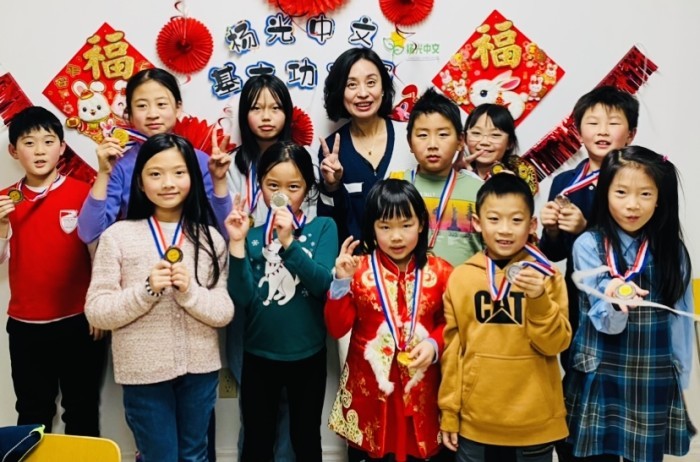
A place where they have friends. Teachers. A stage. Work they have created. And memories they share.
Years later, children may not remember every textbook or every test.
But they may remember the excitement of reading their first complete story in Chinese.
They may remember the nervousness of stepping onto a stage for the first time.
They may remember hearing applause.
And they may remember the teacher who once believed they could do something they were afraid to try.
If a school can occupy that kind of place in a child's memory, it has already become something more than a tutoring centre.
10. We Want Parents and the School to Become True Educational Partners
A child's growth can never be accomplished by the school alone.
This is especially true for Mandarin learning overseas.
Outside the limited number of classroom hours each week, the language environment at home, parents' attitudes, and long-term consistency all have a significant impact.
But we do not believe schools should simply transfer all responsibility to parents.
Professional responsibilities should be handled professionally by the school.
The school should design the curriculum, teach each class well, and provide families with clear guidance and feedback.
Parents, in turn, can provide stable support and help children maintain continuity in their learning.
This relationship should not be a simple transaction between customer and service provider.
Nor should it be a one-way arrangement in which the school gives instructions and parents simply comply.
It should be a partnership built around the growth of the child.
The trust families place in a school is deeply valuable.
That trust does not mean believing the school will always be right.
It means believing that when a child encounters a problem, the school will take it seriously.
When a course needs adjustment, the school will respect educational principles.
And when short-term interests conflict with a child's long-term interests, the school will try to choose the latter.
We hope the parent community around YouGuang can also become more than a place for announcements and events.
We hope parents can exchange educational experiences, better understand children's development, and participate in building a warmer and more responsible educational community.
A good school is not simply a collection of teachers and students.
It is built by teachers, children, parents, and the values they choose to share.
11. What Kind of Children Do We Ultimately Hope to Educate?
Every educational philosophy eventually leads to one fundamental question: What kind of person do we hope a child will become?
Of course, we want YouGuang students to become strong Mandarin learners.
We want them to understand, speak, read, and write Chinese.
We want them to use Mandarin confidently when they need it and to enter Chinese culture through the language.
But that is still not everything.
We hope that, through learning Mandarin, they gradually develop other important qualities.
We hope they can express themselves.
We want children to communicate their ideas clearly while also learning to listen to and respect the voices of others.
We hope they develop confidence.
Not the confidence that comes from believing they are always right, but the confidence to try even when they are nervous or not yet perfect.
We hope they develop responsibility.
We want them to take their role seriously, understand teamwork, and recognize that their choices affect other people.
We hope they have cultural roots.
We want children to know where they come from while remaining open to people, cultures, and worlds different from their own.
We hope they retain imagination and creativity.
We do not want them only to repeat answers that already exist. We want them to ask questions, tell stories, and imagine new possibilities.
And above all: We hope there is light within them.
The “light” in YouGuang does not mean external recognition or being better than everyone else. It represents an inner strength: kindness, courage, passion, perseverance, and the ability to continue believing in growth even when things are difficult. We do not simply want YouGuang students to achieve better Mandarin results. We hope their experience here helps them become more complete, capable, and resilient human beings.
12. Our Dream Is Bigger Than One School
YouGuang is still a young school.
There are many parts of our curriculum still to improve, teachers to develop, and ideas that will require years of patient work.
But from the beginning, we have carried an ambitious dream.
We hope to build an approach to overseas Mandarin education that genuinely respects children, values meaningful outcomes, balances engagement with ability, and connects language learning with expression.
We hope to demonstrate that:
Mandarin can be learned seriously and joyfully.
Character learning can be systematic without becoming monotonous.
Traditional culture can be respected while being presented in ways contemporary children can genuinely understand.
A Mandarin school can have high standards and still have warmth.
It can pursue professionalism without giving up idealism.
Perhaps one day YouGuang will be present in more cities.
But wherever we go, we want the same core principles to remain:
Take every class seriously. Take every child seriously. Take seriously the trust families place in us.
We do not simply want to reproduce the name “YouGuang” in more locations.
What we truly hope to reproduce is our curriculum, our standards, our teaching culture, our sense of educational responsibility, and our respect for children's growth.
Our vision is: Wherever there are Chinese families, may there be YouGuang.
But the meaning of this vision is larger than the number of campuses we may one day operate.
It means that children growing up overseas should have access to excellent Mandarin education wherever they live.
They should not lose the opportunity to enter the Chinese-language world simply because they are growing up abroad.
Alongside English, they should have the opportunity to possess another language, another cultural perspective, and another intellectual and emotional home.
Conclusion: Let Growth Happen at YouGuang
So what kind of school do we ultimately want YouGuang to become?
We want to be a school with standards.
A school with a coherent curriculum, serious teaching, and accountability for learning outcomes.
We want to be a school with warmth.
A school that sees each child, understands their differences, and values the trust of every family.
We want to be a school with creativity.
A school where games, reading, drama, the stage, and expression become genuine parts of Mandarin education.
We want to be a school with a dream.
A school that does not simply repeat what has always been done, but continues exploring better possibilities for Mandarin education overseas.
And we want to become a school that can stand the test of time.
A school that does not chase temporary excitement or allow short-term interests to constantly change its direction.
Instead, year after year, we want to keep doing the right things carefully and well.
What YouGuang ultimately hopes to achieve has never been simply to help children recognize more Chinese characters.
We want those characters to help them read stories.
We want those stories to help them understand culture.
We want culture to help them understand themselves.
And we want expression to help them step confidently into a larger world.
We believe every child carries a unique light.
Education should not force children into a shape designed by adults.
It should create the conditions for their light to be seen, protected, and gradually strengthened.
That was the original intention behind YouGuang.
And no matter how far the school grows or how large it may one day become, it is a direction we must never forget.
Let growth happen at YouGuang.
Author: Yifan Gao, PhD in Chinese Language and Literature, Co-Founder & Principal of Youguang Mandarin School.