At some point in every child’s Chinese learning journey, one question becomes especially important:
When will my child actually be able to read Chinese independently?
Many children study Chinese for several years. They recognize some characters and can read a lesson aloud with their teacher. Yet when they open a Chinese book they have never seen before, they may still be unable to continue without help.
This means that they have learned Chinese, but they have not yet developed true independent reading ability.
At YouGuang Chinese School, we see one particularly important turning point in Chinese education overseas:
the transition from depending on a teacher to learn Chinese to being able to learn through Chinese reading itself.
Once children can read independently, they are no longer limited to the small amount of Chinese input available during a weekly class.
They can read stories, articles, and books on their own. Through reading, they continue to encounter new vocabulary, sentence patterns, ideas, and knowledge.
At that point, Chinese begins to develop beyond the classroom.
How do children reach that stage?
Our approach follows four connected steps:
systematic character learning → repeated exposure → levelled reading → independent reading.
These four steps form an important part of the logic behind both our curriculum and our teaching materials.
1. Systematic Character Learning: Reading Cannot Develop Without a Sufficient Character Base
For children growing up overseas, character recognition is one of the fundamental requirements for Chinese reading.
Children living in a Chinese-speaking environment encounter written Chinese throughout the day.
They see Chinese at school, in books, on television, online, in stores, on signs, and throughout everyday life.
For children overseas, the environment is very different.
Most of their schooling, reading, friendships, media, and daily activities take place in English. Their exposure to written Chinese may be limited mainly to family communication and a weekly Chinese class.
As a result, it is difficult for them to build Chinese literacy through natural exposure alone.
Chinese education overseas therefore needs to be much more intentional and systematic about character development.
At YouGuang, systematic character learning begins at approximately age four.
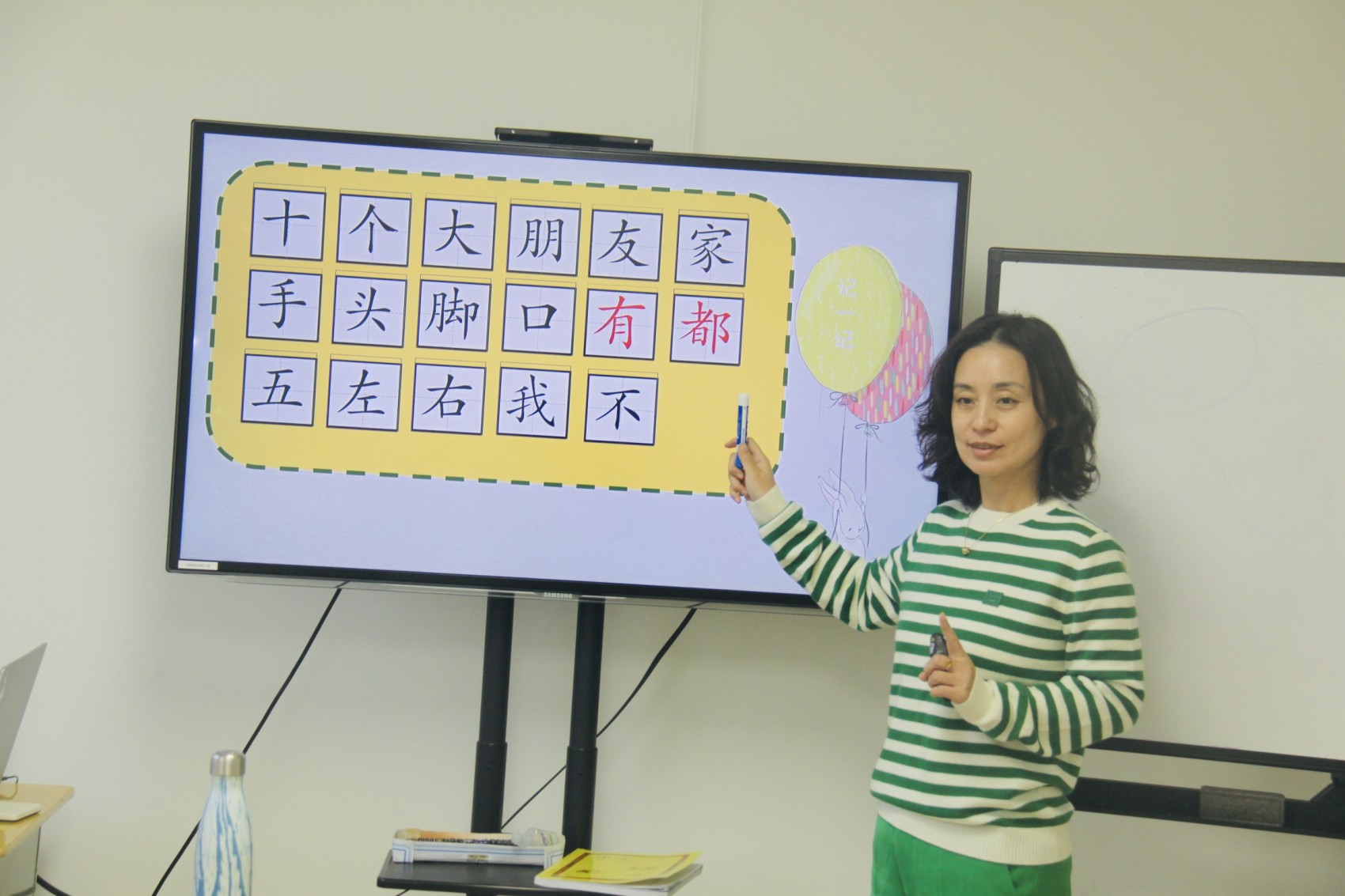
Students in our introductory literacy classes typically learn around six new Chinese characters in each lesson.
We do not believe that four- and five-year-old children should spend their early years only singing songs, playing games, or practising simple conversation while delaying character learning until much later.
If the long-term goal is independent reading, children should begin developing familiarity with written Chinese early.
This does not mean asking young children to memorize flashcards mechanically.
Characters are introduced through pictures, movement, stories, songs, games, vocabulary, and meaningful language contexts. Children gradually connect each character’s form, pronunciation, and meaning.
Beginning in Level 1, the pace becomes more structured.
Students typically learn approximately 12 new characters per lesson, adding around 300 characters over a school year.
The levelled curriculum then continues to expand students’ character knowledge steadily over time.
Why does this matter?
Because reading ability cannot develop without a sufficient base of recognizable characters.
If children learn only a small number of disconnected characters each year, they may remain below the threshold required for meaningful reading.
As their character knowledge grows, however, they begin to encounter texts in which most of the words are already familiar.
That is when real reading becomes possible.
At YouGuang, character learning is therefore not simply a vocabulary list attached to a lesson.
It is one of the central pathways into reading.
2. Repeated Exposure: Learning a Character Once Does Not Mean Mastering It
Children learning Chinese overseas face another very practical challenge:
they forget characters easily.
A student may recognize a character perfectly during class, but if they do not see it again for several weeks, that character can quickly fade from memory.
This is not a lack of effort.
Language learning depends on repeated exposure.
And for children overseas, there are far fewer opportunities to encounter Chinese characters naturally once class ends.
That means teaching a character once is not enough.
For literacy to become stable, the same character must reappear at different times, in different words, different sentences, and different texts.
This principle is built into YouGuang’s teaching materials.
A new character may first appear in the core lesson.
It then returns in vocabulary, sentences, exercises, and related reading passages.
Many previously learned characters continue to appear again in later lessons.
This repetition is not simply asking children to copy the same character ten times.
What matters more is:
recognizing the same character repeatedly in different language contexts.
A child may first learn the character 跑 in the word 跑步.
Later, the same character appears in a sentence meaning “The dog ran home.”
Later still, it appears in another story about children running to the playground.
Each encounter strengthens the child’s memory.
Gradually, the character changes from something the child remembers because “the teacher just taught it” into something they recognize automatically.
That is real mastery.
For this reason, we believe that the key question is not only whether a character has been introduced.
It is whether the child continues to encounter it.
3. Levelled Reading: Children Need Texts They Can Actually Read
Once children have begun building a systematic character base, the next question is:
How do those characters become reading ability?
This is where levelled reading becomes essential.
A common experience for parents is to give a child a Chinese children’s book soon after the child begins recognizing characters.
But when the child opens the book, each page contains many unfamiliar characters.
The reading quickly becomes:
“What is this character?”
“What does this mean?”
“Can you read this for me?”
That is difficult to sustain.
The problem is not necessarily that the child dislikes Chinese.
The material may simply be too far above the child’s actual literacy level.
Independent reading requires one very important condition:
Most of the characters in the text must already be familiar to the child.
Only then can the child maintain reading flow, understand complete sentences, and experience the confidence of thinking, “I can read this myself.”
This principle plays a major role in the design of YouGuang teaching materials.
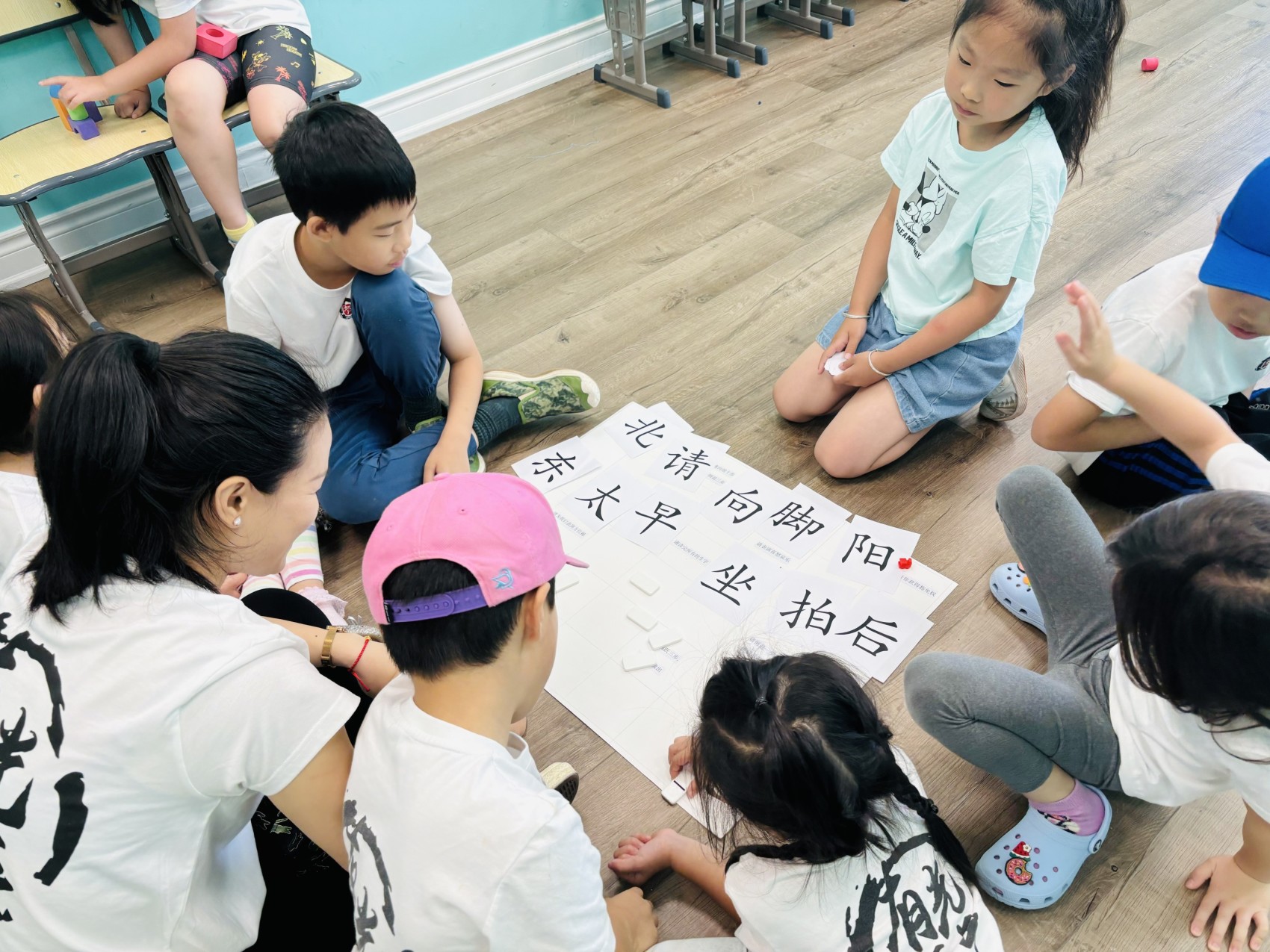
In our curriculum, each core lesson is accompanied by three related reading passages.
These passages are not random supplementary texts, nor are they simply taken from existing children’s books.
They are designed around the characters and vocabulary students have learned by that stage of the curriculum.
This means that when students encounter a new reading passage, the story itself may be new, but most of the characters are already familiar.
That distinction is critical.
The child is now using previously learned written language to understand new content.
That is genuine reading.
At the same time, a limited amount of new vocabulary and expression can be introduced naturally without overwhelming the reader.
This is the purpose of levelled reading.
It does not simply mean labelling books “easy,” “medium,” or “hard.”
It means aligning the linguistic difficulty of a text with the child’s actual character knowledge.
4. Why Three Reading Passages After Every Core Lesson?
This is another important feature of our curriculum design.
If children learn one core text and simply read the same text over and over again, they may become highly familiar with it.
Eventually, they may even memorize sentences and appear to read fluently without truly recognizing every character.
That does not necessarily demonstrate transferable reading ability.
We therefore place previously learned characters into new texts.
After a core lesson, students encounter three additional reading passages with different content.
These passages deliberately reuse characters from the current and earlier lessons.
A character might therefore be encountered:
first, in the core lesson;
again, in the first related reading;
again, in a different story;
and later, in future lessons and texts.
Through this distributed repetition across different contexts, recognition becomes increasingly stable.
At the same time, children are no longer reading only one familiar lesson.
They are using the same literacy foundation to understand multiple new texts.
The three additional passages therefore serve two purposes simultaneously:
they reinforce character recognition and develop reading ability.
This is why we see our core lessons and reading passages as one integrated system rather than two separate components.
5. From Teacher-Supported Reading to Reading Independently
Reading development does not happen all at once.
It usually progresses through a gradual reduction in support.
At first, the teacher reads with the students.
The teacher helps them recognize characters, understand vocabulary, and follow sentence meaning.
Later, children begin reading short sentences independently.
Then they move into short passages.
As their literacy grows, they are able to read longer and increasingly complex texts.
Eventually, we want something very specific to happen.
A teacher gives a student a passage the child has never studied before.
The teacher does not pre-teach every character and does not explain every sentence first.
The child picks up the text, reads through it independently, and understands most of what it says.
At that point, we can genuinely say:
This child is beginning to read Chinese independently.
There is a major difference between being able to read a previously taught lesson and being able to read a new text.
The first may depend heavily on memory and teacher support.
Independent reading means:
the child can use their own literacy and language knowledge to understand unfamiliar text.
That is one of the most important milestones in Chinese education.
6. Independent Reading Becomes an Accelerator for Chinese Development
Why do we place so much importance on independent reading?
Because children overseas have very limited classroom time.
If all of a child’s Chinese input comes from a two-hour weekly class, even excellent teaching has a natural ceiling.
Once the child can read independently, that ceiling changes dramatically.
A single book can provide tens of minutes of meaningful Chinese input.
Ten books can expose a child to thousands of sentences.
Continued reading expands vocabulary, strengthens grammatical intuition, builds background knowledge, and increases familiarity with natural Chinese expression.
More importantly, the child no longer depends entirely on a teacher to “teach Chinese.”
Chinese itself begins to teach the child Chinese.
Through Chinese, the child can encounter stories, history, people, ideas, and knowledge.
At that point, reading begins to generate further language growth.
This is why we see independent reading as a crucial threshold.
Before independent reading, Chinese development relies heavily on external instruction.
After independent reading begins, children gain a degree of self-directed language development.
7. Pinyin Should Be a Tool, Not a Permanent Reading Crutch
Pinyin is valuable.
It helps children understand pronunciation and can support Mandarin learning.
However, long-term dependence on pinyin can create another challenge.
Instead of reading Chinese characters directly, children may begin to “read the pinyin.”
Their eyes automatically move to the phonetic spelling above the characters, even when those characters have already been learned.
Over time, pinyin can become a crutch that delays direct character recognition.
We therefore see pinyin as a useful learning tool, but not as a permanent substitute for Chinese literacy.
True independent reading ultimately requires children to:
see a Chinese character, recognize it directly, and understand its meaning.
This is another reason why systematic character learning and repeated exposure matter so much.
When characters themselves become familiar enough, children no longer need pinyin in order to read.
8. “Just Read More” Is Not Enough
Parents are often told:
“If you want your child to improve in Chinese, just have them read more.”
The general idea is reasonable.
But for a child who has not yet developed sufficient literacy, simply telling them to “read more” does not solve the problem.
First, children need something they can actually read.
If every page contains too many unfamiliar characters, they will struggle.
If the material is far below their level, it may not produce meaningful growth.
Effective reading development requires three conditions:
a steadily expanding character base;
reading materials that match the child’s actual literacy level;
and repeated encounters with previously learned characters across different texts.
Only when these conditions are in place does “more reading” become truly productive.
This is why we do not treat character learning and reading as separate parts of the YouGuang curriculum.
We see them as one continuous progression:
systematic character learning → repeated exposure → levelled reading → independent reading.
Systematic character learning answers the question: “Does the child know enough characters to read?”
Repeated exposure answers: “Will the characters remain in long-term memory?”
Levelled reading answers: “Does the child have texts that match their current ability?”
Independent reading answers the final question: “Can the child continue reading without depending on a teacher?”
Conclusion: The Goal of Character Learning Is Not More Characters—It Is Reading
We care deeply about how many characters children learn each year.
But the number itself is never the final educational goal.
Recognizing 300, 600, or 1,000 characters matters because of what those characters eventually allow a child to do.
Characters form sentences.
Sentences form passages.
Passages become stories and books.
So the ultimate purpose of character learning is not simply to recognize more characters.
The purpose of character learning is reading.
And the ultimate goal of reading is not simply to finish another passage.
It is to reach the point where a child can move beyond the textbook and the teacher, open a Chinese book independently, and enter a larger world of stories, ideas, knowledge, and culture.
That is what we mean by independent reading.
And it is the progression we continue to build into both our curriculum and teaching practice:
systematic character learning, repeated exposure, levelled reading, and ultimately, independent reading.
Author: Yang Guang, Founder and Chief Teacher of Youguang Chinese School, and Lead Curriculum Developer and Editor-in-Chief of Youguang’s In-House Mandarin Curriculum.