In Oakville, more and more parents begin thinking about Chinese education when their children are four or five years old.
Is this the right time to start learning Chinese?
Some Chinese-speaking families in Oakville want their children to maintain strong Chinese skills as English becomes increasingly dominant. Some families primarily speak Cantonese or English at home and want their children to build a foundation in Mandarin and Chinese reading. Other families simply want their children to begin learning Chinese as an additional language.
But ages 4–6 are still very young.
Parents often ask:
Is four too young to start Chinese?
Can a four-year-old really handle a two-hour class?
Should children learn Pinyin or Chinese characters first?
Should they start writing Chinese characters at this age?
Can a child learn Chinese if no one speaks Mandarin at home?
Can two hours of Chinese class per week really make a difference?
These are important questions.
For children growing up in Oakville, ages 4–6 are also a unique stage. As children enter Kindergarten and elementary school, English quickly becomes more dominant in their daily lives. Whether Chinese begins to develop a strong foundation during these early years can make an important difference in their long-term learning journey.
Based on our years of experience teaching young children at YouGuang Chinese School, we have come to believe:
Ages 4–6 are not about starting elementary-school Chinese early. They are a unique and important stage of Chinese language development.
When this stage is approached well, children gain much more than a head start in recognizing Chinese characters. They can begin developing an interest in Chinese, a feel for the language, early literacy, reading habits, and confidence that supports years of future learning.
Here are eight questions Oakville parents often ask about Chinese classes for children ages 4–6.
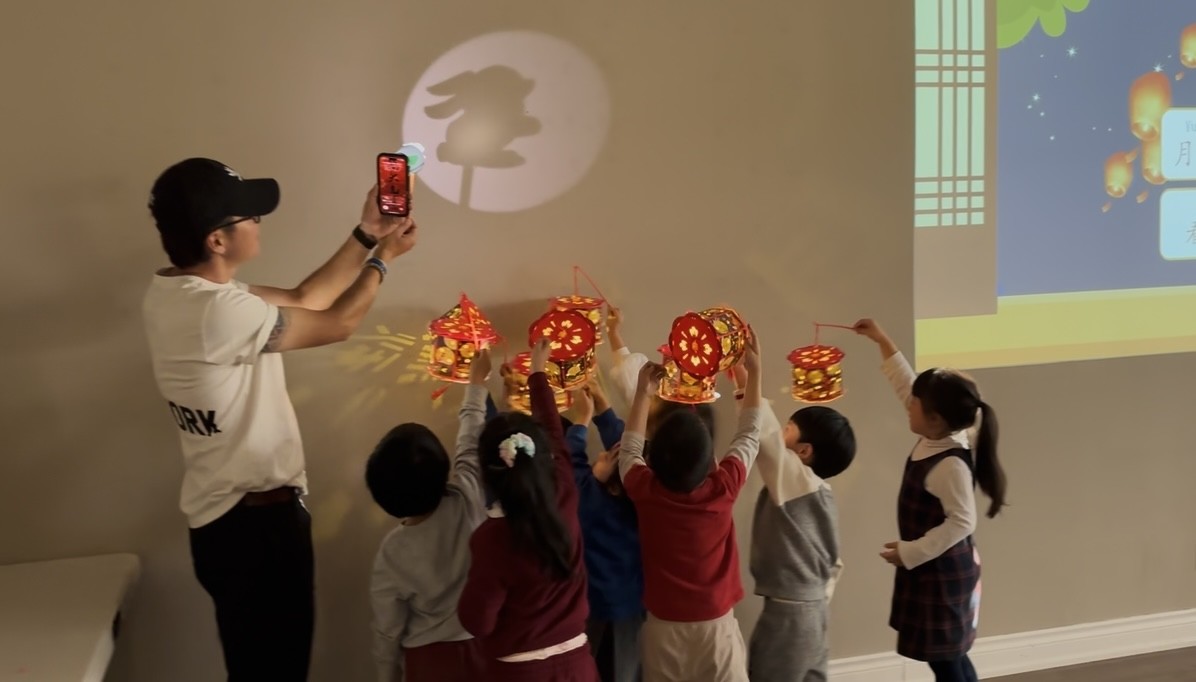
1. Is Four Too Young to Start Learning Chinese?
In general, four is not too young.
But there is an important condition: a four-year-old needs a program designed for four-year-olds—not elementary-school instruction simply introduced two years earlier.
At age four, children can begin learning Chinese characters, songs, picture books, stories, and everyday expressions. They can also gradually develop classroom routines and learning habits.
What should generally be avoided is excessive copying, mechanical repetition, large amounts of homework, lengthy explanations, or unnecessary academic pressure simply to produce faster short-term results.
So when Oakville parents begin looking for Chinese classes for a four-year-old, the better question is not simply:
“Can a four-year-old learn Chinese?”
It is:
“How should a four-year-old learn Chinese?”
Good Early Years Chinese education is not about pushing academics earlier and earlier.
It is about starting at an appropriate age with an approach appropriate for that age.
2. Why Are Ages 4–6 Especially Important for Children Growing Up in Oakville?
For children growing up in an English-speaking environment such as Oakville, ages 4–6 often coincide with a major shift in their language environment.
Once children enter Kindergarten and elementary school, English usually occupies an increasingly large part of their day.
They hear English at school.
They speak English with friends.
They watch programs, read books, attend activities, and explore the world increasingly through English.
Even in families where parents consistently speak Chinese at home, a familiar pattern can gradually appear:
Parents speak Chinese. The child understands perfectly—but increasingly answers in English.
This does not necessarily mean that the child dislikes Chinese.
Often, English has simply become the language that feels easiest and most natural to use.
That is why Chinese learning during ages 4–6 can serve an important purpose:
As English grows rapidly, Chinese can begin building its own foundation at the same time.
That foundation includes:
listening and comprehension;
willingness to speak;
early Chinese character recognition;
beginning reading skills;
positive experiences with Chinese;
and a habit of learning Chinese consistently.
At this stage, children are building more than knowledge.
They are beginning to build their relationship with the Chinese language.
3. Can a Four-Year-Old in Oakville Really Handle a Two-Hour Chinese Class?
This is one of the questions we hear most often.
When Oakville parents first hear “two-hour Chinese class,” many understandably wonder:
“My child can barely sit still for 20 minutes at home. How could they possibly manage two hours?”
That concern makes sense.
If a four-year-old were expected to sit at a desk and study continuously for two hours, it would indeed be very difficult.
But a two-hour class designed properly for young children should never mean sitting still for two hours.
A good Early Years classroom needs frequent and purposeful changes of pace.
For example:
character learning may lead into a Chinese song;
the song may lead into an interactive activity;
children may then listen to a picture-book story;
later, a game, movement activity, or craft may reinforce what they have learned;
and an appropriate break can be built into the class.
A young child's attention should not be maintained for two hours by repeatedly saying:
“Sit down. Don't move.”
Instead, well-designed activities should repeatedly bring children’s attention back to the learning.
So when comparing Chinese classes for young children in Oakville, parents should not ask only:
“How long is the class?”
They should also ask:
“How are those two hours designed?”
4. Should Chinese Classes for Ages 4–6 Focus on “Learning” or “Playing”?
The answer is:
Both matter.
Early Chinese education can easily drift toward one of two extremes.
At one extreme, the program becomes overly academic:
too much character memorization, writing, worksheets, and homework.
At the other extreme:
the classroom is lively, children play many games and have a wonderful time—but a year later, relatively little lasting Chinese proficiency has developed.
We do not believe either extreme is ideal.
A Chinese class for ages 4–6 should be enjoyable, but:
Fun should support learning, not replace it.
For example, YouGuang's Early Years Chinese classes have clear character-learning goals while incorporating Chinese songs, classic picture books, stories, games, interaction, and activities connected to each lesson.
A child may feel that they are singing, listening to a story, or playing a game.
But those activities should not be random.
They should repeatedly reinforce the language and characters being learned.
For young children in Oakville, our goal is to achieve both:
Children enjoy the class, and parents can see real progress.
These two goals do not have to compete with each other.
5. Should Young Children Learn Pinyin or Chinese Characters First?
Many Oakville parents ask this question.
Our approach is that young children do not need to complete Pinyin before they begin learning Chinese characters.
Chinese characters themselves can be part of early language learning.
Young children are often highly receptive to visual patterns. Through high-frequency characters, vocabulary, pictures, stories, and repeated reading, they can gradually build connections between:
Character → Sound → Meaning
Pinyin is certainly valuable.
As children grow and progress through the curriculum, Pinyin can become a useful tool for pronunciation and independent learning.
But if young learners spend a long period working primarily on Pinyin while delaying meaningful exposure to characters and reading, they may miss opportunities to develop early familiarity with Chinese characters and an interest in reading.
We therefore prefer to develop characters, language comprehension, and early reading together, rather than treating them as completely separate stages.
After all, the ultimate purpose of recognizing Chinese characters is not to win a character-recognition contest.
It is to reach the point where a child can open a Chinese book—and actually read it.
6. Should Children Ages 4–6 Start Writing Chinese Characters?
They can begin to explore writing, but large amounts of character writing should not be the central goal at this stage.
Writing Chinese characters requires fine motor control, stroke coordination, spatial awareness, and sustained concentration.
Children develop these abilities at different rates between ages four and six.
If too much classroom time is devoted to repetitive copying too early, a child may spend enormous effort “writing Chinese” without developing reading and broader language skills at the same pace.
At this stage, we place greater priority on building:
Chinese character recognition;
vocabulary;
listening comprehension;
spoken expression;
early reading;
and an initial understanding of character structure.
Writing can be introduced progressively as children become developmentally ready.
How many characters a four-year-old can write should not be the main measure of how well that child is learning Chinese.
7. Can My Child Learn Chinese if We Mainly Speak English or Cantonese at Home?
Absolutely.
And this is particularly relevant for many families in Oakville.
Oakville is a diverse, multilingual community. In addition to Mandarin-speaking families, there are many Cantonese-speaking, English-speaking, mixed-language, and multilingual households.
Children from all of these backgrounds can learn Chinese.
But they may not need exactly the same learning pathway.
Consider a Mandarin-speaking child seeing the word “苹果” for the first time.
The child may already know what an apple is called in Mandarin and understand the spoken word perfectly.
The main new connection is:
Familiar Sound and Meaning → Chinese Characters
For a child growing up primarily in English, even the spoken word may be new.
Their learning pathway may look more like:
Sound → Meaning → Context → Chinese Characters → Reading
This is why Oakville parents from non-Mandarin-speaking households should ask an important question when choosing a Chinese program:
Does the class assume that every child already understands Mandarin?
If it does, a complete beginner may spend every class trying to catch up.
YouGuang Chinese School – Oakville Campus therefore provides both regular Chinese programs and learning pathways for children from English-speaking, Cantonese-speaking, and other non-Mandarin-speaking families.
A child does not need to speak Mandarin before they are allowed to begin learning Chinese.
8. Can Two Hours of Chinese Class per Week Really Make a Difference?
For most children growing up in Oakville, the majority of their week takes place in an English-speaking environment.
Two hours alone cannot provide all the language exposure a child needs.
But that does not mean two hours per week cannot be highly valuable.
The key is to understand the different roles of school and home:
The classroom builds the learning system. Home helps keep that system active.
A two-hour class can provide:
new language input;
accurate modelling;
guided reading;
teacher-student interaction;
speaking opportunities;
learning strategies;
and ongoing feedback.
Parents do not need to recreate another Chinese class at home every evening.
For children ages 4–6, a more realistic approach might be just 10 minutes a day:
pointing and reading together;
repeating a Chinese song from class;
reading a Chinese picture book;
using several words learned that week in everyday life;
or asking the child to retell a story from class.
Small amounts of consistent, long-term exposure are often more useful than one long study session on the weekend.
So when Oakville families compare Chinese schools, they should also ask:
Does the school show parents how to support learning at home—or does it simply assign more homework?
Beyond These 8 Questions: What Else Should Oakville Parents Look For?
For children ages 4–6, several additional details can make a significant difference.
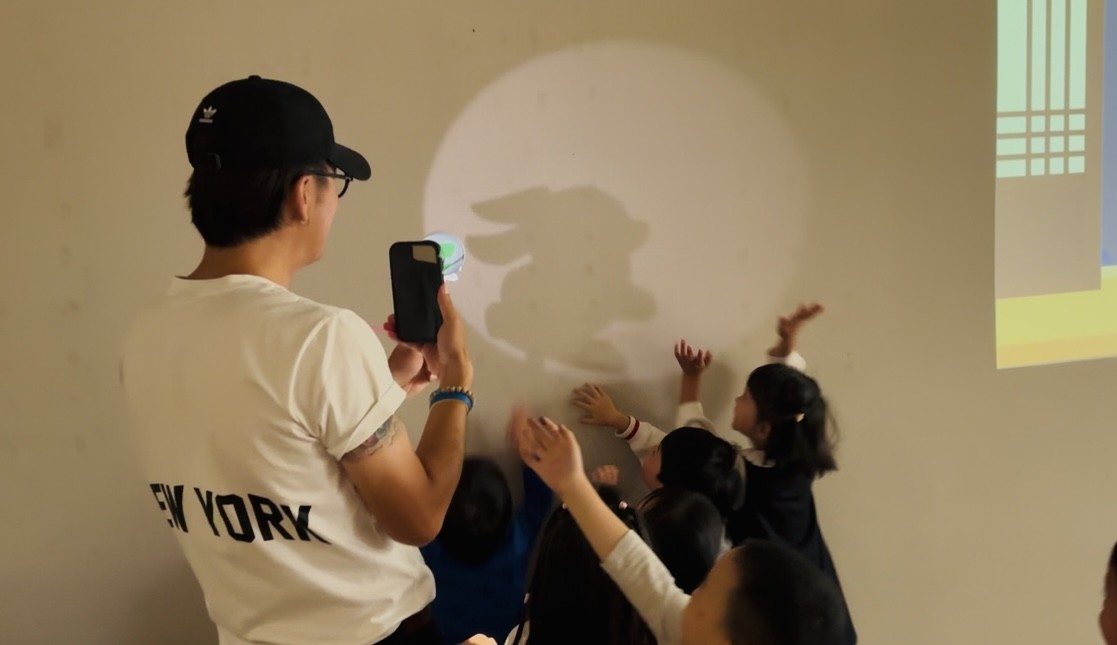
How Large Is the Class—Really?
Young children generally need more teacher attention than older students.
Teachers are not only teaching Chinese. They are also observing attention, emotions, participation, confidence, and classroom adjustment.
Parents should therefore avoid asking only:
“How many students are currently in this class?”
A better question is:
“What is the maximum class size?”
At YouGuang Chinese School – Oakville Campus, classes are limited to a maximum of 8 students.
For us, the greatest value of a small class is not simply having fewer children in the room.
It means:
Teachers have a genuine opportunity to know each child, while every child has more opportunities to speak, read, interact, and express themselves.
Does the Teacher Know How to Teach Young Children—or Simply Know Chinese Well?
These are different skills.
Speaking excellent Chinese does not automatically mean someone can teach a four-year-old effectively.
An Early Years teacher needs to know:
when to change the pace;
when to introduce a different activity;
how to involve a shy child;
how to respond when a child gives the wrong answer;
how to maintain classroom expectations without damaging a child's interest in learning;
and how to bring an exciting game back to the actual learning objective.
When Oakville parents choose an Early Years Chinese program, a teacher's understanding of young children matters just as much as their command of Chinese.
Where Will My Child Go After the Early Years Program?
This is an important question that parents sometimes overlook when enrolling a four-year-old.
What happens next year?
Does the child simply repeat similar activities?
Do they suddenly move into a completely different textbook?
When does structured reading begin?
When does writing develop?
When does the child begin expressing more complex ideas in Chinese?
A good Early Years program should lead somewhere.
After YouGuang's Early Years program, students can continue into our structured Level 1–8 curriculum.
We want a child who begins Chinese at age four to see a long-term pathway:
Interest → Character Recognition → Reading → Understanding → Writing → Expression
Early Years Chinese should be the beginning of the journey, not an isolated program.
How Can Oakville Parents Tell Whether Their Child Is Ready to Start?
Age is only one indicator.
Two children who are both four years old may have very different levels of classroom readiness.
Parents can consider:
Can the child follow simple group instructions for short periods?
Can they participate without a parent sitting beside them?
Are they beginning to show interest in stories, songs, pictures, or written language?
Can they communicate basic needs?
If parents are still uncertain, the most useful answer is often not to keep guessing.
Let the child experience an actual class.
How a child responds in the classroom can tell us much more than the number on their birth certificate.
What Should Parents Observe During a Trial Chinese Class in Oakville?
When comparing Chinese classes for ages 4–6 in Oakville, try to look beyond classroom decorations—and beyond whether your child simply smiled during the lesson.
Observe the learning itself.
Does the teacher welcome your child personally?
How many genuine opportunities does your child have to participate?
Are the same two or three confident children answering every question?
Does the lesson move naturally between activities?
After an exciting game, can the teacher bring the children back to focused learning?
How does the teacher respond when a child makes a mistake?
Can the teacher maintain clear classroom expectations while still making children comfortable enough to participate?
After two hours, is your child exhausted and resistant—or still positive about the experience?
At the end of class, can your child tell you about a few characters, a song, or a story they learned?
Instead of asking only:
“Did you have fun?”
try asking:
“What did you like most today?”
“What did you learn today?”
“Would you like to come again?”
Those answers can tell parents a great deal.
What Matters Most When Children Ages 4–6 Learn Chinese in Oakville?
If we had to summarize the goal of this stage in one sentence, it would be:
Help children discover: “I can learn Chinese—and I enjoy learning it.”
“I can learn it” builds competence and confidence.
“I enjoy learning it” makes long-term learning possible.
At age four, a child may know only dozens or hundreds of Chinese characters.
But if that child gradually enjoys reading Chinese, becomes comfortable speaking it, approaches the language without fear, and develops a habit of continued learning, those early foundations can grow into genuine language proficiency over the years.
That is why Early Years Chinese is not about getting ahead of other children.
Its real purpose is:
To give many years of future Chinese learning a strong beginning.
If you are looking for Chinese classes for a 4- to 6-year-old in Oakville, we recommend looking beyond distance, tuition, or the number of activities offered.
Consider whether:
the child enjoys the classroom;
the program is truly designed for young learners;
the class size allows individual attention;
the teacher understands each child;
and the curriculum provides a clear pathway from early learning into literacy and long-term Chinese proficiency.
YouGuang Chinese School – Oakville Campus provides structured Chinese education for children ages 4–16. Our Early Years Chinese program for ages 4–6 is one of our key programs. Classes at the Oakville Campus are limited to a maximum of 8 students, with a long-term learning pathway from Early Years through Level 1–8, as well as programs for children from non-Mandarin-speaking families.
When children first walk into a Chinese classroom, they may be there because their parents brought them.
A few years later, we hope they continue learning because:
Chinese has gradually become a language they can call their own.
Click to learn more about YouGuang Chinese School-Oakville Campus