Children growing up in Canada learn Mandarin in a very different environment from children growing up in China. They have less exposure to the language, fewer hours each week to study it, and often move between English and Mandarin throughout their daily lives.
That is why our curriculum was built specifically for children growing up abroad—not simply adapted from textbooks used in China.
Our goal is to help children develop Mandarin step by step, at a pace that is challenging but realistic, so they can build strong literacy, confident expression, and a lasting connection with the language.
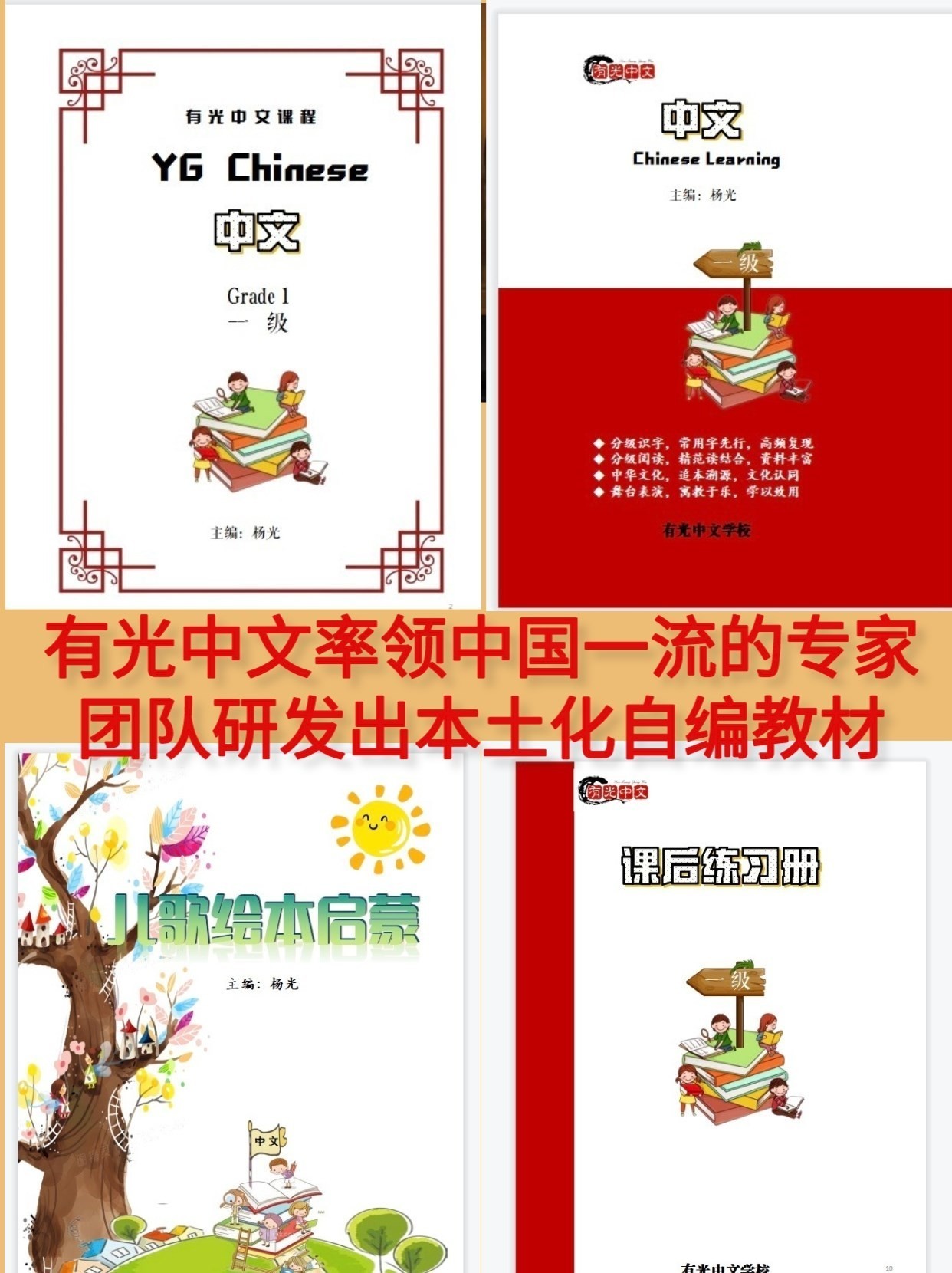
A Clear Learning Path from Early Years to Advanced Study
Our Mandarin program is designed primarily for children who already hear and speak Mandarin at home, while accommodating different ages and levels of proficiency.
The curriculum includes:
* Kindergarten-level Mandarin foundations
* Level 1 through Level 8
* Advanced study leading toward AP Chinese and other higher-level Mandarin learning
Each level is supported by our own textbooks, workbooks, handwriting materials, graded reading, and online homework system.
As students progress, they develop listening, speaking, character recognition, reading comprehension, writing, and increasingly sophisticated spoken expression.
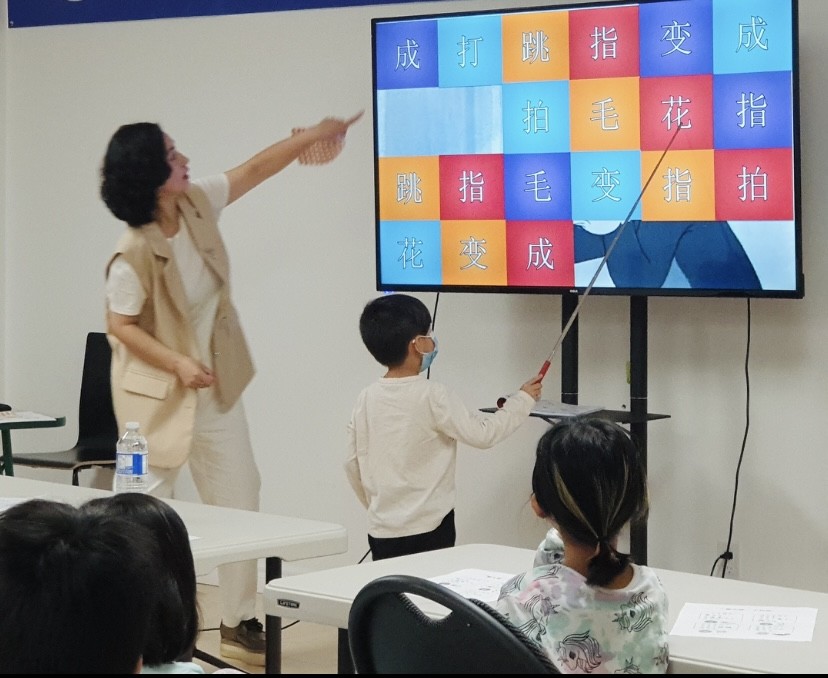
Designed for Children Growing Up Outside China
Our curriculum is not a simplified version of a Chinese elementary-school textbook.
It is built around the realities of children learning Mandarin in Canada: limited weekly learning time, different home-language environments, and the need to balance progress with motivation.
The sequence is carefully paced so that students can continue moving forward without being overwhelmed or losing interest.
Steady Progress, Level by Level
The curriculum is organized according to age, Mandarin ability, and cognitive development.
High-frequency characters are introduced first and reinforced repeatedly in meaningful contexts. In the early years, the focus is on building interest and foundational character recognition.
From Level 1 onward, students typically learn approximately 300 Chinese characters each year while steadily expanding vocabulary, reading ability, writing, and oral expression.
The aim is neither to move too slowly nor to push children beyond what is realistic. We want progress to feel achievable, meaningful, and sustainable.
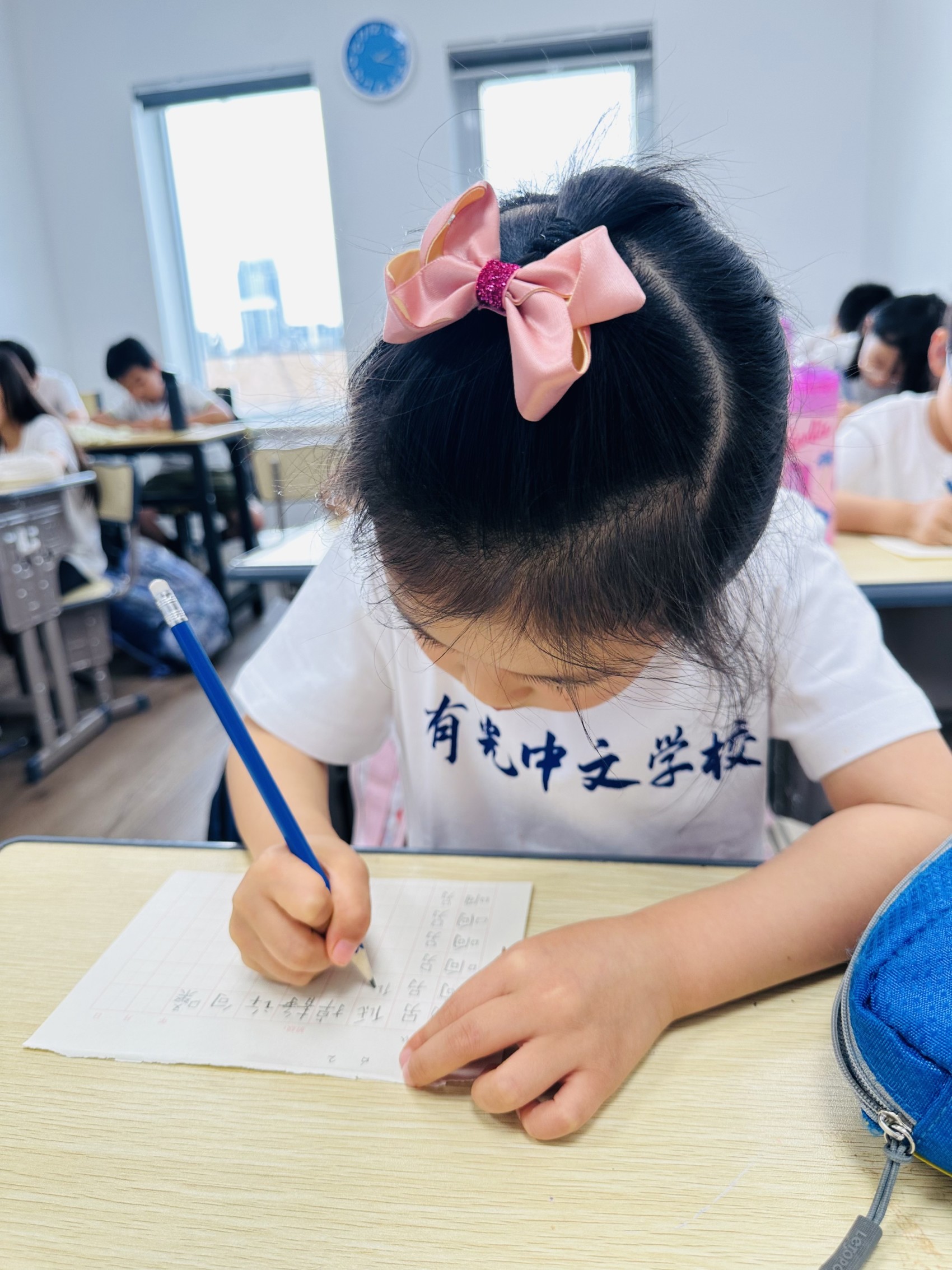
From Character Recognition to Real Communication
Recognizing Chinese characters is essential—but it is only the beginning.
Students use what they learn in words, sentences, stories, conversations, presentations, and writing. As they advance, the emphasis gradually shifts from recognizing characters to reading comprehension, retelling, public speaking, writing, and expressing ideas clearly in Mandarin.
We want children not only to recognize Chinese, but to understand it, think through it, and use it confidently.
Learning Characters Without Becoming Dependent on Pinyin
Pinyin is an important tool for pronunciation, but it should not become a permanent substitute for reading Chinese characters.
Pinyin is taught systematically beginning in Level 1 to support accurate pronunciation and independent learning. At the same time, students are encouraged to recognize characters directly rather than relying on pinyin above every word.
Over time, they learn to see a Chinese character and understand its meaning naturally.
Recognize First, Write with Purpose
Children growing up abroad have limited time for Mandarin each week. Spending too much of that time on repetitive copying can reduce both efficiency and motivation.
Our approach is to build recognition and reading ability first, then introduce handwriting progressively.
Students learn proper stroke order, radicals, character structure, and handwriting conventions, but writing practice is purposeful rather than repetitive.
The goal is not to see how many times a child can copy a character. The goal is for the child to understand it, recognize it, and use it.
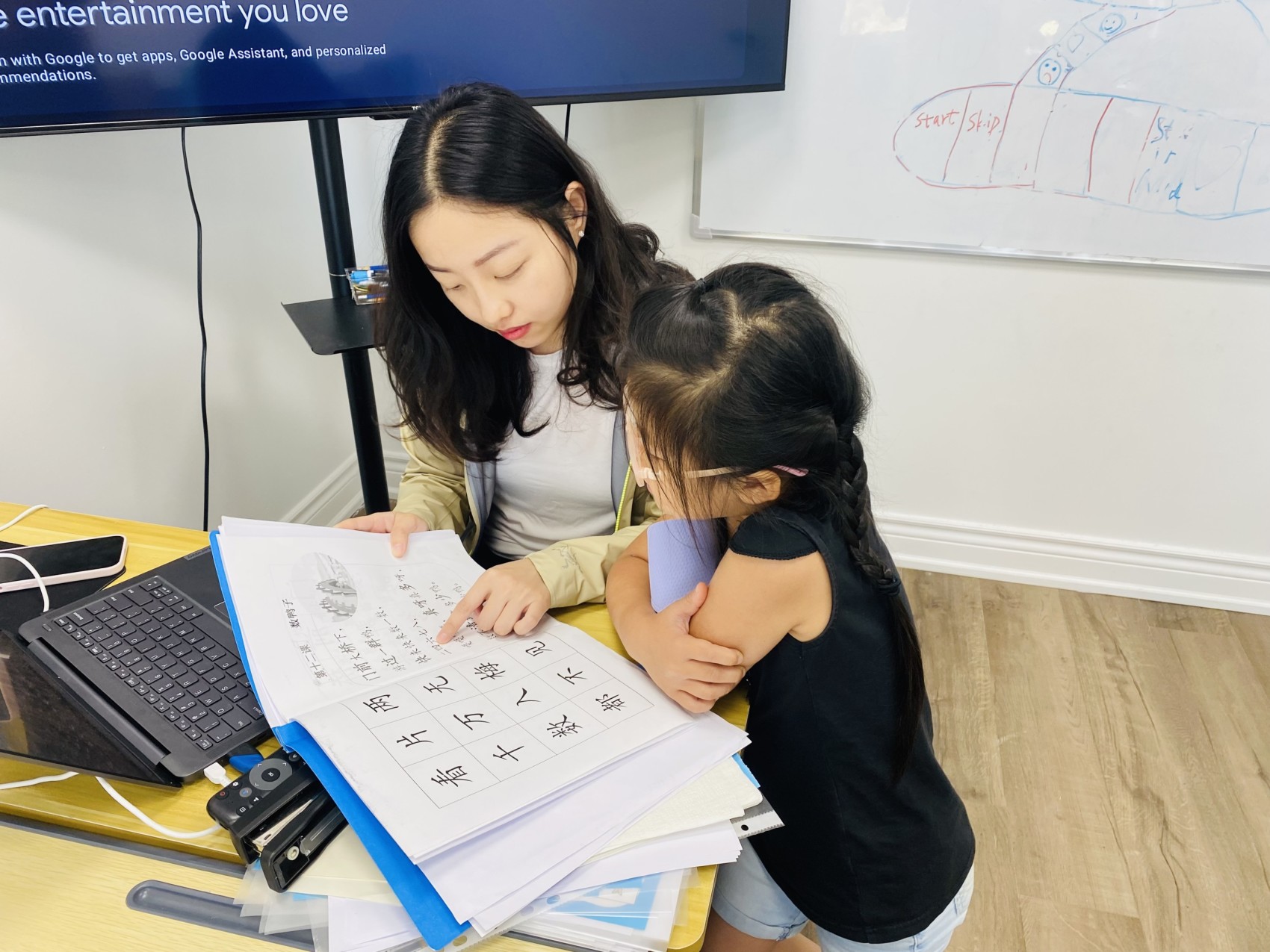
Reading and Culture Grow Together
Every level includes reading materials matched to students’ literacy development.
These may include Chinese history, traditional stories, fables, mythology, idioms, children’s literature, and carefully selected modern works.
Reading gives students repeated exposure to the characters they already know while gradually expanding vocabulary and comprehension.
Culture develops alongside language. Younger students begin with everyday traditions, festivals, and familiar cultural themes. As they progress, they encounter Chinese history, geography, literature, customs, and ideas.
In this way, Mandarin becomes more than a school subject—it becomes a way to understand a wider cultural world.
More Than a Textbook
The program is designed as a complete learning system rather than a collection of individual lessons.
It brings together:
* Level-based textbooks
* Classroom lesson design
* Workbooks
* Handwriting practice
* Graded reading
* Speaking and expression training
* Chinese culture
* Online homework
* Teacher training and shared curriculum planning
* Progress tracking and stage-based assessment
Classroom learning, home practice, reading, and expression reinforce one another, giving children a clear and consistent path forward.
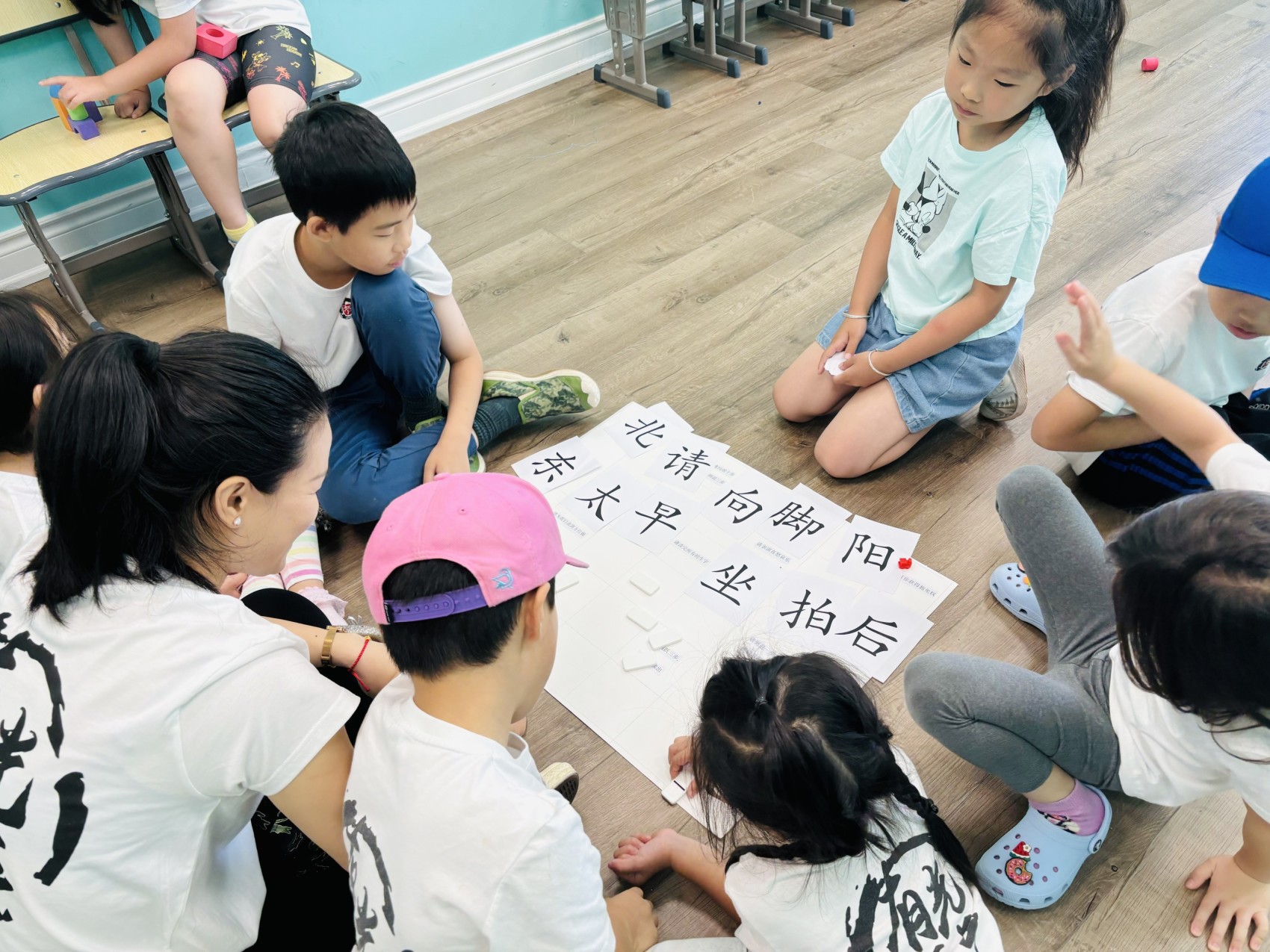
What We Want Children to Be Able to Do
Over time, we want students to be able to:
* understand and participate in everyday Mandarin conversations
* build a strong and lasting foundation in Chinese characters
* independently read age-appropriate Chinese texts and books
* describe experiences and express ideas clearly in Mandarin
* develop increasingly strong Chinese writing skills
* understand Chinese culture with confidence in a multicultural environment
* continue using and learning Mandarin with genuine interest
The goal is not simply for children to have studied Mandarin.
The goal is for Mandarin to become a language they truly own.
Risk-Free Enrollment
Cancel anytime and receive a refund for unused tuition, with no cancellation or processing fees.
View the Full Refund Policy >>