Chinese for Ages 4–6: Inside YouGuang’s Early Years Program
One of the most common questions parents ask us is:
“Can a four- or five-year-old really stay engaged in a two-hour Chinese class?”
At YouGuang Chinese School, our answer comes from years of classroom experience:
Yes — when the class is designed properly for young children.
Our Early Years Program for children ages 4–6 has long been one of YouGuang’s signature programs. The reason is simple: we place some of our strongest teachers in these classes, and the curriculum is designed to achieve two goals at the same time.
Children enjoy learning Chinese, and they genuinely learn Chinese.
We do not believe that an engaging class should mean a less rigorous class. Young children can sing, move, act, listen to stories, make crafts, and play — while still building real Chinese language skills.
That balance is at the heart of the YouGuang Early Years Program.
More Than Just “Fun Chinese”
For children between four and six years old, enjoyment matters enormously.
A child’s early experience with Chinese can influence how they feel about the language for years to come. If their first experience is overly repetitive, stressful, or difficult to understand, they may quickly begin to resist learning.
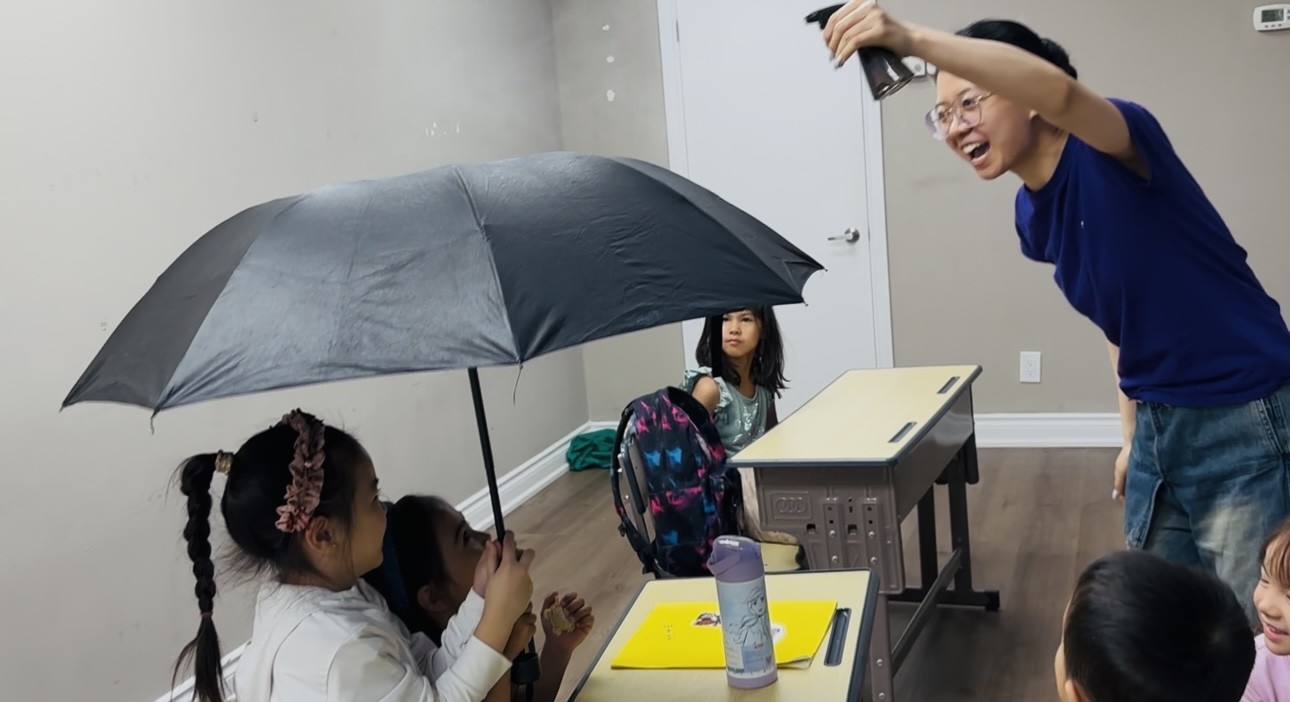
That is why our classrooms are lively, interactive, and age-appropriate.
But we also believe that keeping children happy is not enough.
A good early Chinese program should help children:
enjoy the language, understand the language, remember what they learn, and gradually build real literacy.
Our classes are not simply filled with songs, crafts, and games to keep children occupied.
Every activity has a learning purpose.
Stories reinforce vocabulary.
Songs reinforce pronunciation and sentence patterns.
Crafts review the characters and themes taught that day.
Drama gives children a reason to speak.
Movement helps young learners connect language with meaning.
The classroom may feel playful, but the learning is intentional.
Six Chinese Characters in Every Class
Chinese character recognition is an important part of the YouGuang curriculum, even at the Early Years level.
In each class, children are introduced to approximately six Chinese characters.
We do not expect four- or five-year-olds to memorize characters through repetitive copying.
Instead, children encounter the same characters in multiple ways.
A character may appear in:
* a picture or visual prompt
* a classroom game
* a song
* a story
* a picture book
* a craft
* a role-play activity
* a short performance
The goal is to help children gradually connect:
the shape of the character, its sound, and its meaning.
By meeting the same language repeatedly in different contexts, children develop recognition more naturally and retain what they learn more effectively.
This early literacy foundation prepares them for the more systematic reading and writing stages that follow.
What Happens in a YouGuang Early Years Class?
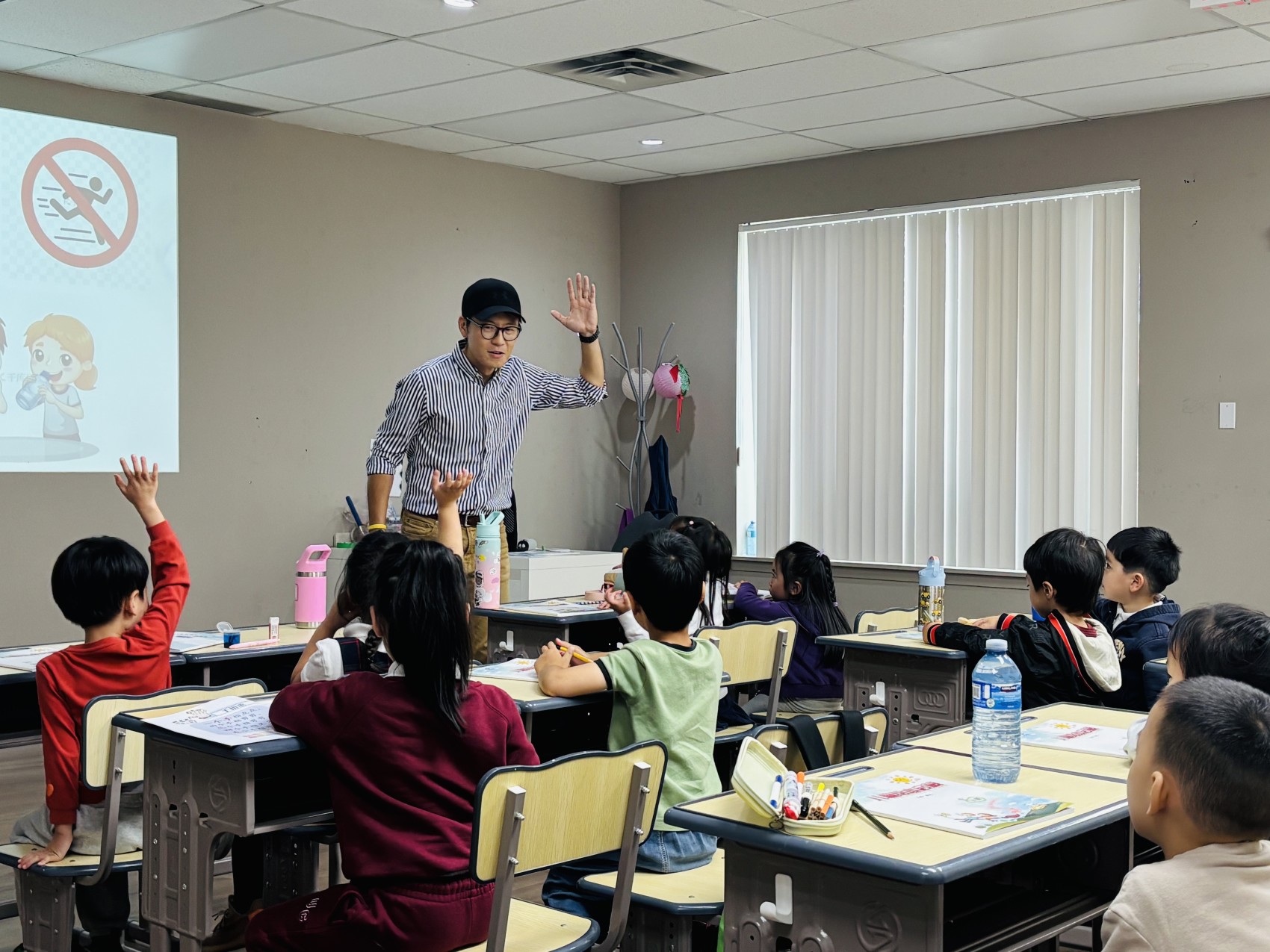
A two-hour class for young children should never feel like two hours of sitting at a desk
Our lessons are divided into different learning segments, with changes in pace, movement, and activity throughout the class.
A typical lesson may include the following.
Chinese Character Recognition
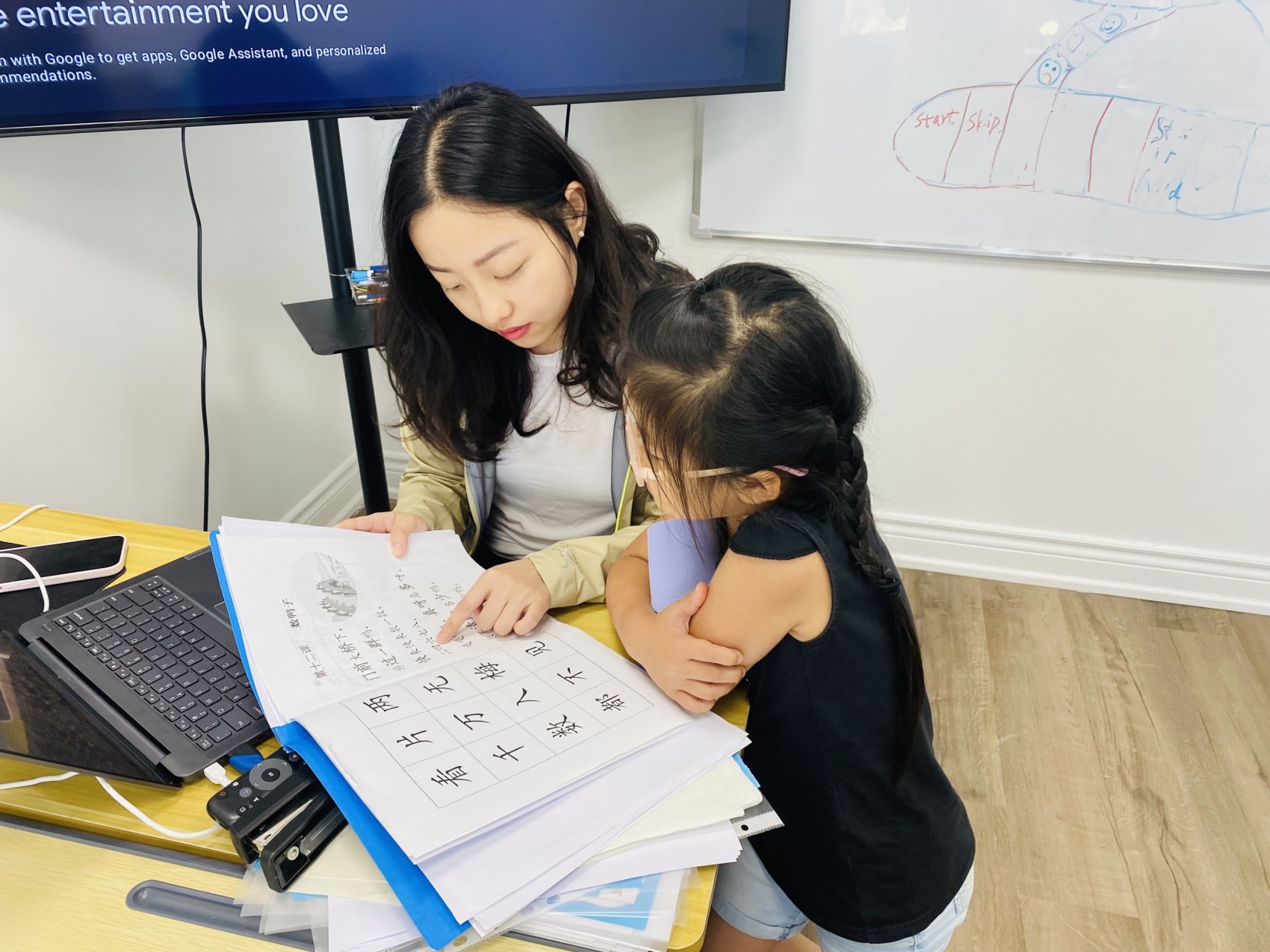
Each class introduces a small set of core Chinese characters.
Teachers use pictures, gestures, stories, movement, games, and repeated exposure to help children understand and remember them.
The objective is not short-term memorization.
We want children to become comfortable seeing Chinese characters and gradually develop a strong recognition foundation.
Chinese Songs and Rhymes
Children learn a Chinese song or rhyme connected to the lesson theme.
Music is especially effective for young learners because rhythm and repetition make language easier to remember.
Whenever possible, the song also reinforces characters, vocabulary, or expressions introduced during the same class.
Children are therefore not simply “singing for fun.”
They are repeating meaningful Chinese in a way that feels natural.
Classic Picture Books
Picture-book reading is another important part of our Early Years Program.
Teachers introduce carefully selected classic children’s stories and picture books through interactive storytelling.
Instead of simply reading the book aloud, teachers may ask questions, encourage predictions, invite children to describe pictures, or act out parts of the story.
Through stories, children experience Chinese as a complete language rather than as isolated characters and vocabulary lists.
This is an important bridge between character recognition and reading comprehension.
Theme-Based Crafts
Young children learn through their hands as well as their ears and eyes.
Craft activities are therefore incorporated into the curriculum, but they are directly connected to the language being taught.
A craft may reinforce:
the characters, song, story, cultural theme, or vocabulary from that day’s lesson.
As children cut, paste, draw, build, and create, they encounter the lesson content again in another form.
For young learners, this multi-sensory repetition can make learning both more memorable and more enjoyable.
Pinyin Introduction
Children are also gradually introduced to Pinyin when developmentally appropriate.
At this age, the goal is not intensive phonics drilling.
Instead, children begin developing awareness of Chinese sounds and pronunciation patterns, preparing them for more systematic Pinyin learning later.
Chinese Culture
Language and culture naturally belong together.
Throughout the year, children are introduced to age-appropriate elements of Chinese culture, including traditional festivals, stories, customs, and everyday cultural knowledge.
The aim is not to teach culture as a separate subject.
Instead, children encounter culture naturally through stories, songs, activities, and classroom themes.
Can Young Children Really Learn for Two Hours?
Many parents are initially concerned that a four- or five-year-old will not be able to stay focused for a two-hour class.
This concern is completely understandable.
The key is that children are not expected to sit still for two hours.
Our teachers constantly vary the learning format.
Children may spend one period learning characters, then stand up for a song or movement activity.
They may listen to a story, participate in a game, act out a scene, make a craft, or respond to the teacher through gestures and movement.
The class keeps changing.
Young children therefore do not experience the lesson as:
“I have to sit here for two hours.”
Instead, they experience it as:
“What are we doing next?”
Over the years, we have taught children as young as approximately three and a half who were able to participate successfully in this format.
The secret is not asking young children to behave like older students.
The secret is designing the class around the way young children naturally learn.
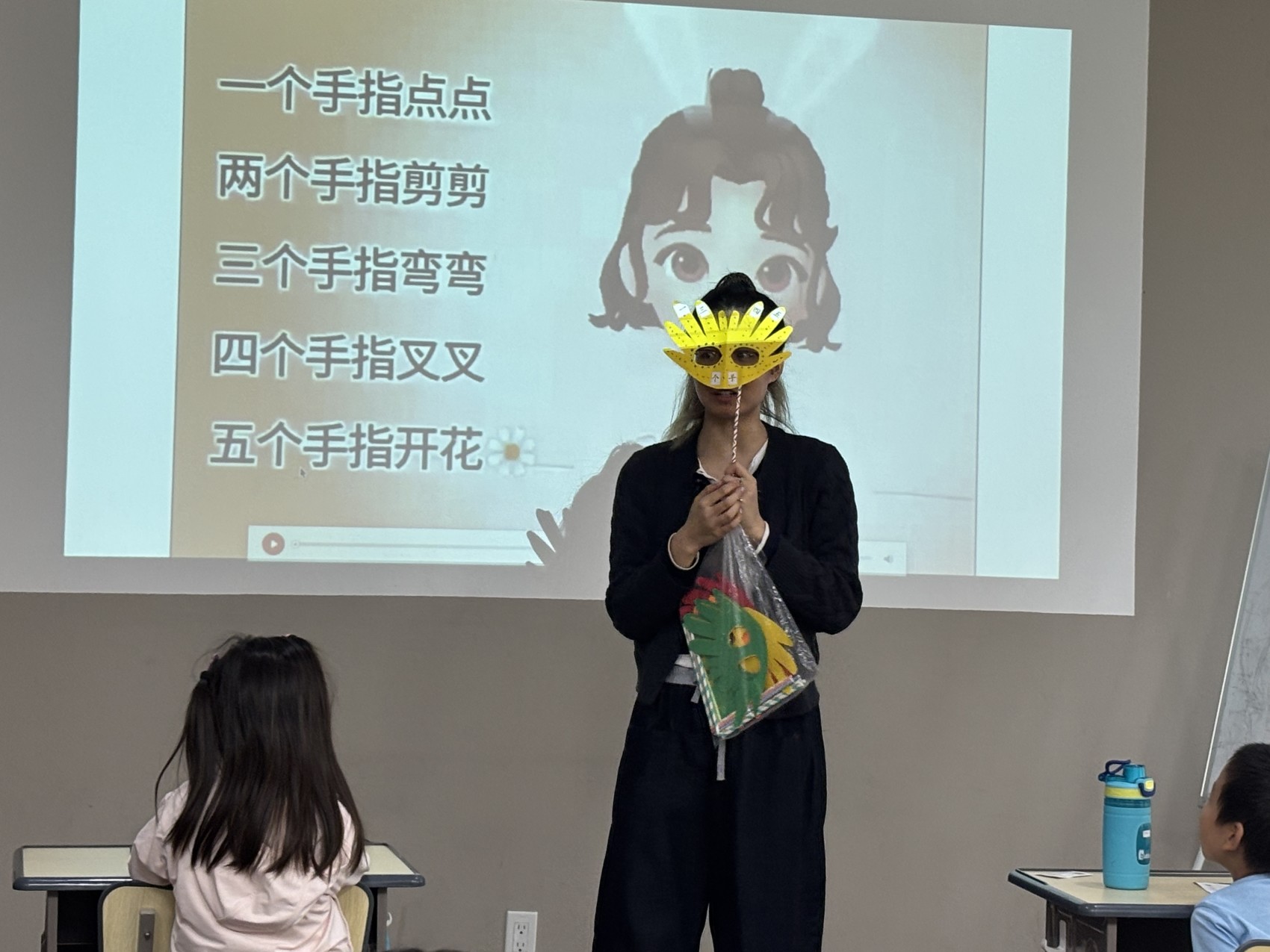
Singing, Movement, Drama and Performance
YouGuang Early Years teachers use many forms of expressive learning.
Depending on the lesson, children may participate in:
* movement and gesture songs
* rhythm activities
* Orff-inspired music activities
* role play
* simple drama
* story performance
* textbook-based mini plays
* classroom games
* group interaction
Young children learn language especially well when meaning is connected to action.
If they learn the character for “run,” they may run.
If they learn “big” and “small,” they may use their bodies to show the difference.
If they learn a story, they may act it out.
If they learn a song, they may use gestures to represent the lyrics.
The language becomes something children can experience rather than something that exists only on a page.
Engaging Does Not Mean Easy or Superficial
This distinction is very important to us.
Some parents assume that if young children are laughing, singing, moving, and playing, they cannot be doing serious learning.
We see it differently.
A strong early childhood teacher is able to create a classroom in which children are highly engaged while meaningful learning is taking place continuously.
A child may leave class remembering that they sang a song, acted in a story, played a game, and made a craft.
At the same time, that child may also have:
* encountered six new Chinese characters
* repeated important vocabulary many times
* listened to complete Chinese sentences
* practiced pronunciation
* understood a story
* used Chinese during interaction
* reviewed the same language through several different activities
That is what effective early learning looks like.
The child experiences enjoyment.
The teacher is thinking carefully about learning outcomes.
Some of Our Strongest Teachers Teach Early Years
Teaching very young children is not easier than teaching older students.
In many ways, it requires even greater skill.
A strong Early Years teacher must be able to:
maintain attention;
understand when children are becoming tired;
adjust the pace of the lesson;
engage energetic children;
encourage quieter children;
maintain classroom structure;
use music, movement, storytelling, and drama naturally;
and, most importantly,
make sure children are genuinely learning.
For this reason, YouGuang places some of our strongest teachers in our Early Years classes.
A child’s first Chinese teacher can shape how that child feels about Chinese for many years.
We take that responsibility seriously.
Is Age Four the Right Time to Start?
Our Early Years Program is designed primarily for children ages 4–6.
We have also taught some children who were approximately three and a half years old and were developmentally ready for the classroom.
However, age alone does not determine readiness.
Children develop at different rates.
Some four-year-olds are comfortable following a group lesson, participating independently, and responding to a teacher.
Others may benefit from waiting a little longer.
Our goal is not simply to start children as early as possible.
Our goal is to help each child begin at a time when they can have a positive and successful experience.
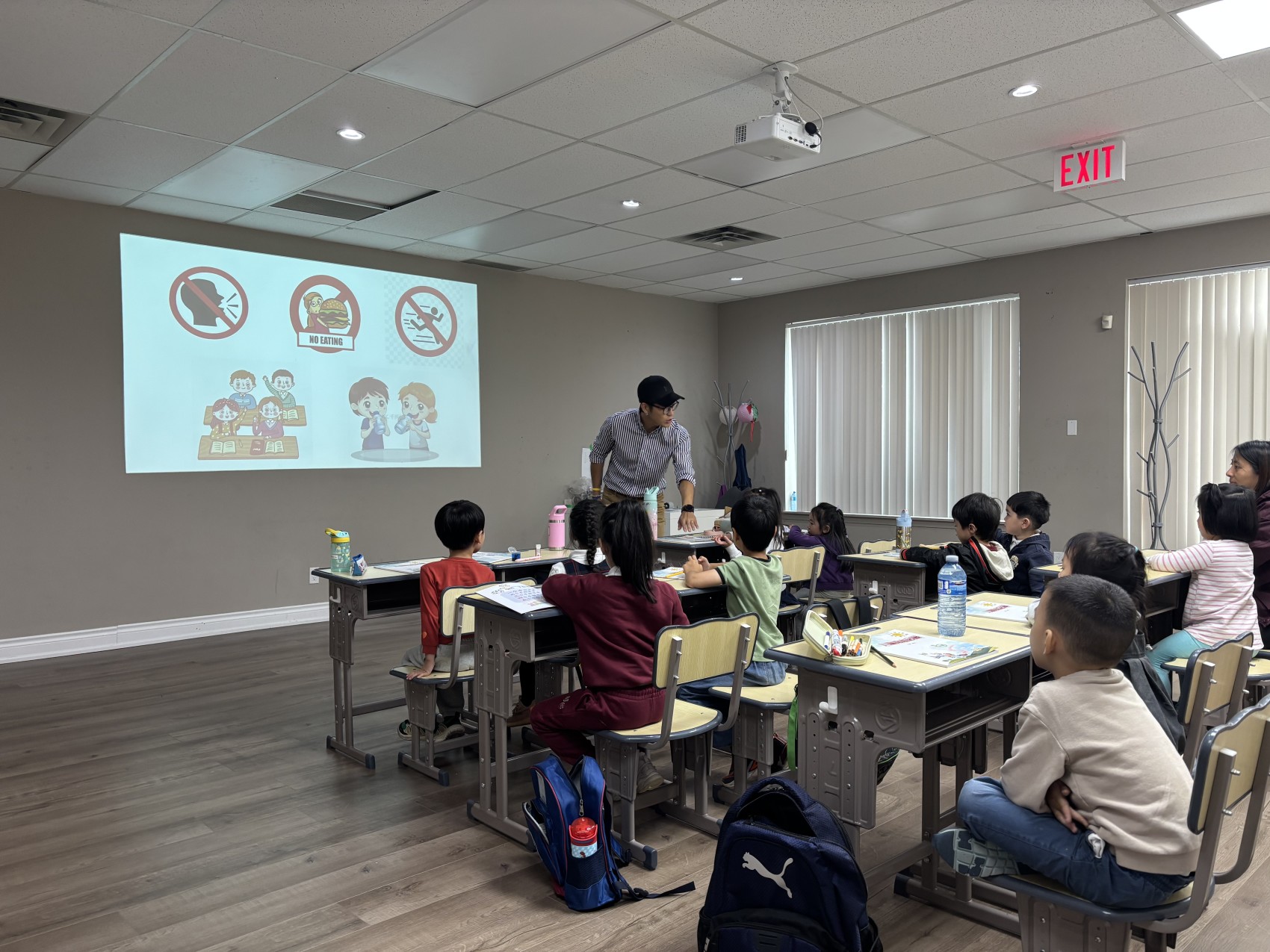
Richmond Hill Campus: A Large Classroom Designed for Young Children
At our Richmond Hill Main Campus, we have dedicated one of our largest and best-equipped classrooms to the Early Years Program.
The classroom is more than 70 square metres in size.
This is especially valuable for younger children because they need more than desk space.
They need room to:
move;
sing;
perform;
participate in games;
work in groups;
act out stories;
and learn through physical activity.
The classroom allows us to combine structured instruction with movement and performance without constantly changing rooms.
An In-Class Washroom for Greater Convenience and Safety
The Richmond Hill Early Years classroom also has its own washroom located directly inside the classroom.
For children ages four to six, this is an important practical advantage.
Children do not need to leave the classroom or walk through hallways to use the washroom.
This makes routines easier for teachers and more convenient for young children.
It also gives parents additional peace of mind.
Sometimes, the features that make a learning environment truly suitable for young children are found in these practical details.
Large-Screen Projection for Young Learners
The Richmond Hill Early Years classroom is equipped with a large projection system.
Picture books, Chinese characters, stories, images, and visual teaching materials can therefore be displayed clearly on a large surface.
Children can view materials comfortably from farther away rather than spending extended periods looking at a small television or computer screen.
The large-format display also works particularly well for group storytelling, character recognition, music activities, and interactive lessons.
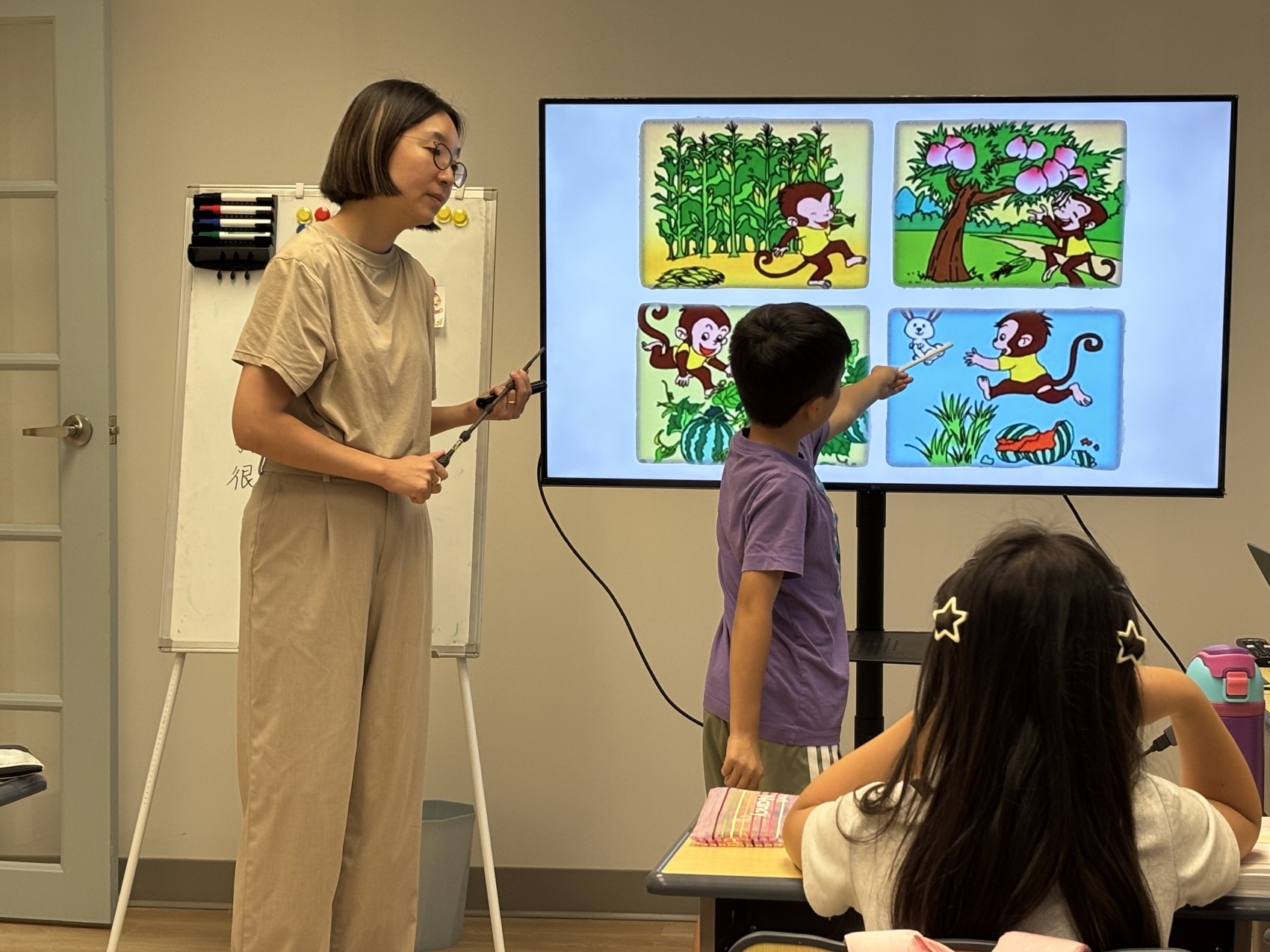
Oakville Campus: Boutique Classes of No More Than 8 Students
At our Oakville campus, the Early Years Program follows a boutique small-class model.
Each class is limited to no more than 8 students.
For younger children, small class size is especially valuable.
It allows the teacher to notice more.
The teacher can see:
who has already understood the lesson;
who needs one more explanation;
who is unusually quiet that day;
who needs encouragement;
who needs pronunciation support;
and who is ready for an additional challenge.
Young children’s attention and learning needs can change very quickly during a lesson.
In a class of no more than eight students, teachers are able to respond more personally and give each child more opportunities to speak, interact, and participate.
That is why the Oakville Early Years Program uses this small-class format.
Early Years Is the Beginning, Not the End
Our goal is not for children to spend several years in an “interest-based Chinese class” without building real language ability.
The Early Years Program is designed as the beginning of a longer learning pathway.
During these early years, children begin building:
interest in Chinese;
character recognition;
pronunciation awareness;
listening comprehension;
classroom learning habits;
confidence in speaking;
and an early love of reading.
These foundations prepare children for the more systematic literacy, reading, comprehension, and expression work that follows.
That is why we take the early years so seriously.
We want children to remember that learning Chinese was enjoyable.
But years later, we also want parents to see that this was where their child’s real Chinese ability began.
A Strong First Experience with Chinese
For many children, ages four to six are the years when they begin forming an opinion about Chinese learning.
If their first experience is dominated by repetitive drills, constant correction, and long periods of sitting still, resistance can develop quickly.
But the opposite problem also exists.
If children spend years in classes that are entertaining but academically unstructured, parents may eventually realize that their child has been “taking Chinese” without developing meaningful Chinese ability.
YouGuang’s Early Years Program is designed to avoid both extremes.
We want children to:
love coming to Chinese class, while steadily building real Chinese skills.
We want them to sing, move, laugh, act, create, and participate.
And behind all of that, we want meaningful learning to happen in every class.
That is what we believe a strong first Chinese classroom should look like.
YouGuang Early Years Chinese Program
Ages: 4–6
Core Learning: Chinese characters, songs and rhymes, picture books, Pinyin introduction, Chinese culture, crafts, drama and language expression
Richmond Hill Main Campus: 70+ sqm Early Years classroom, in-class washroom, large projection system
Oakville Campus: Boutique classes with no more than 8 students
Goal: To build genuine Chinese literacy and communication skills through engaging, age-appropriate learning
Risk-Free Enrollment
Cancel anytime and receive a refund for unused tuition, with no cancellation or processing fees.
View the Full Refund Policy >>