Teaching Mandarin to children growing up abroad presents a fundamental challenge: Are the textbooks they use actually designed for the language environment in which they live?
Learning Chinese overseas is very different from learning Chinese in a Chinese-speaking environment.
For many children, English is the dominant language of school and daily life, while their exposure to Mandarin may be limited to conversations at home and a few hours of formal instruction each week. Some children can understand and speak Mandarin but have difficulty reading Chinese independently. Others come from Cantonese-speaking, bilingual, or non-Mandarin-speaking homes and need to build their Mandarin foundation from an earlier stage.
At the same time, most weekend Chinese programs have only limited classroom time.
The real question, therefore, is not simply how much material can be taught in one lesson. It is how to use that limited time to build a child’s Chinese ability systematically over many years.
This is why YouGuang chose, from the beginning, to develop its own leveled Mandarin curriculum and textbook system specifically for children growing up outside a Chinese-speaking environment.
Designed Around the Reality of Overseas Learners
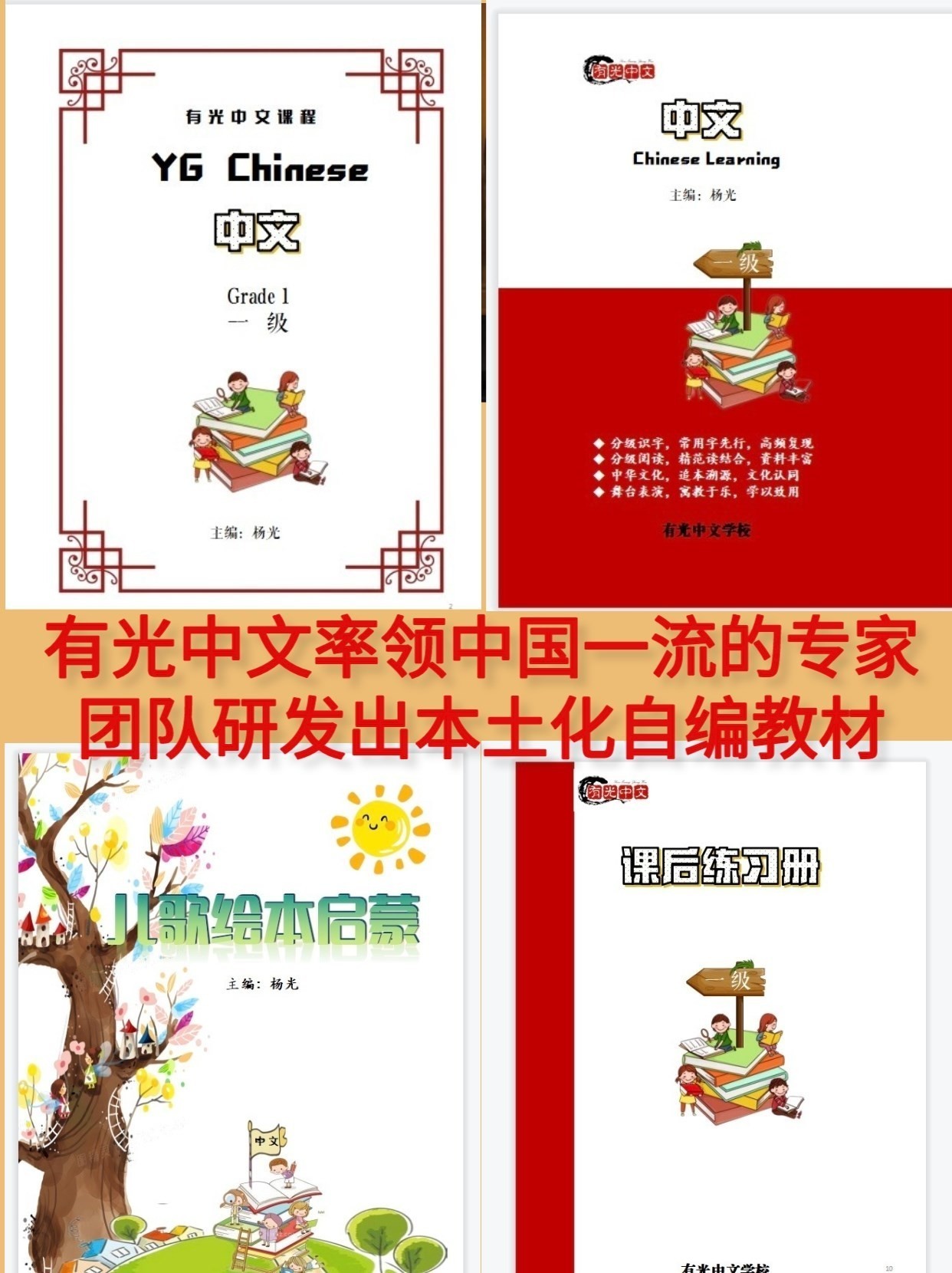
YouGuang’s curriculum and teaching materials are developed in-house under the leadership of founder and educator Yang Guang, together with a professional curriculum development team.
Contributors to the program include university scholars in Chinese language and linguistics, specialists in Chinese education, and nationally recognized elementary Chinese-language teachers.
The curriculum is developed from several perspectives at once: how Chinese characters and the Chinese language work, how children acquire language and literacy, how effective classroom instruction is structured, and how children actually learn Mandarin in an overseas environment.
This leads to one central principle:
A textbook should not simply contain more material. It should create a learning pathway that a child can follow successfully for years.
For this reason, YouGuang’s textbooks are not simplified versions of mainland Chinese language-arts textbooks, nor are they simply collections of characters, stories, songs, and exercises.
The entire curriculum is structured around the specific needs of overseas learners.
Because classroom exposure is limited, learning must be efficient. Because children are not surrounded by Mandarin throughout the day, important characters and vocabulary need to reappear systematically. Because long-term motivation matters, lessons cannot rely on repetitive memorization alone. And because the ultimate goal is independent reading and meaningful communication, every level must prepare students for the next stage of development.
A Continuous Path from Early Childhood to Advanced Chinese
YouGuang’s curriculum currently spans early childhood Mandarin, Kindergarten through Grade 8, and advanced study leading toward AP-level Chinese.
At the early childhood stage, the emphasis is on interest, language awareness, listening, speaking, and a positive emotional connection with Chinese.
Through nursery rhymes, picture books, stories, movement, games, and classroom interaction, young children begin to experience Mandarin as a living language rather than an academic subject.
At this stage, success is not measured simply by how many characters a child can recognize.
The more important goals are to help children enjoy hearing Chinese, become willing to speak it, develop an intuitive feel for the language, and gradually connect sound, meaning, and written characters.
As students move into systematic literacy instruction, the leveled YouGuang Chinese series places increasing emphasis on character recognition, vocabulary, reading comprehension, writing, and oral expression.
With each level, texts become longer, vocabulary becomes richer, sentence structures become more sophisticated, and expectations for comprehension and expression gradually increase.
Students do not start over each year.
Each level is designed to build directly on the one before it.
Over time, children move from recognizing Chinese, to reading Chinese, and ultimately to thinking and expressing themselves through Chinese.
That is what a truly leveled curriculum should accomplish.
Character Recognition Is Not the Final Goal—Independent Reading Is
One of the most common challenges in overseas Chinese education is that children may have studied hundreds of characters but still struggle to read a Chinese text independently.
Recognizing a character in isolation and recognizing it quickly and naturally within a sentence are two very different skills.
For this reason, YouGuang closely integrates character learning with reading development.
During the core literacy stages, each major level introduces approximately 300 carefully selected Chinese characters.
Characters are sequenced systematically, with frequently used characters introduced earlier and key characters repeatedly reappearing in later vocabulary, sentences, lessons, and reading passages.
Our approach can be summarized in four principles:
high-frequency characters first, repeated exposure, cumulative review, and continuous progression.
A new character is not considered “finished” simply because it appeared once in a lesson.
Students encounter it again and again in new contexts.
Previously learned characters remain active in later reading rather than disappearing after a test or unit.
This spiral approach reduces the burden of memorization while helping recognition become increasingly automatic.
Most importantly, children quickly encounter the characters they have learned inside meaningful texts.
Character recognition therefore becomes a tool for reading rather than an isolated exercise.
Helping Children Experience: “I Can Read This by Myself”
Independent reading is one of the central goals of the YouGuang curriculum.
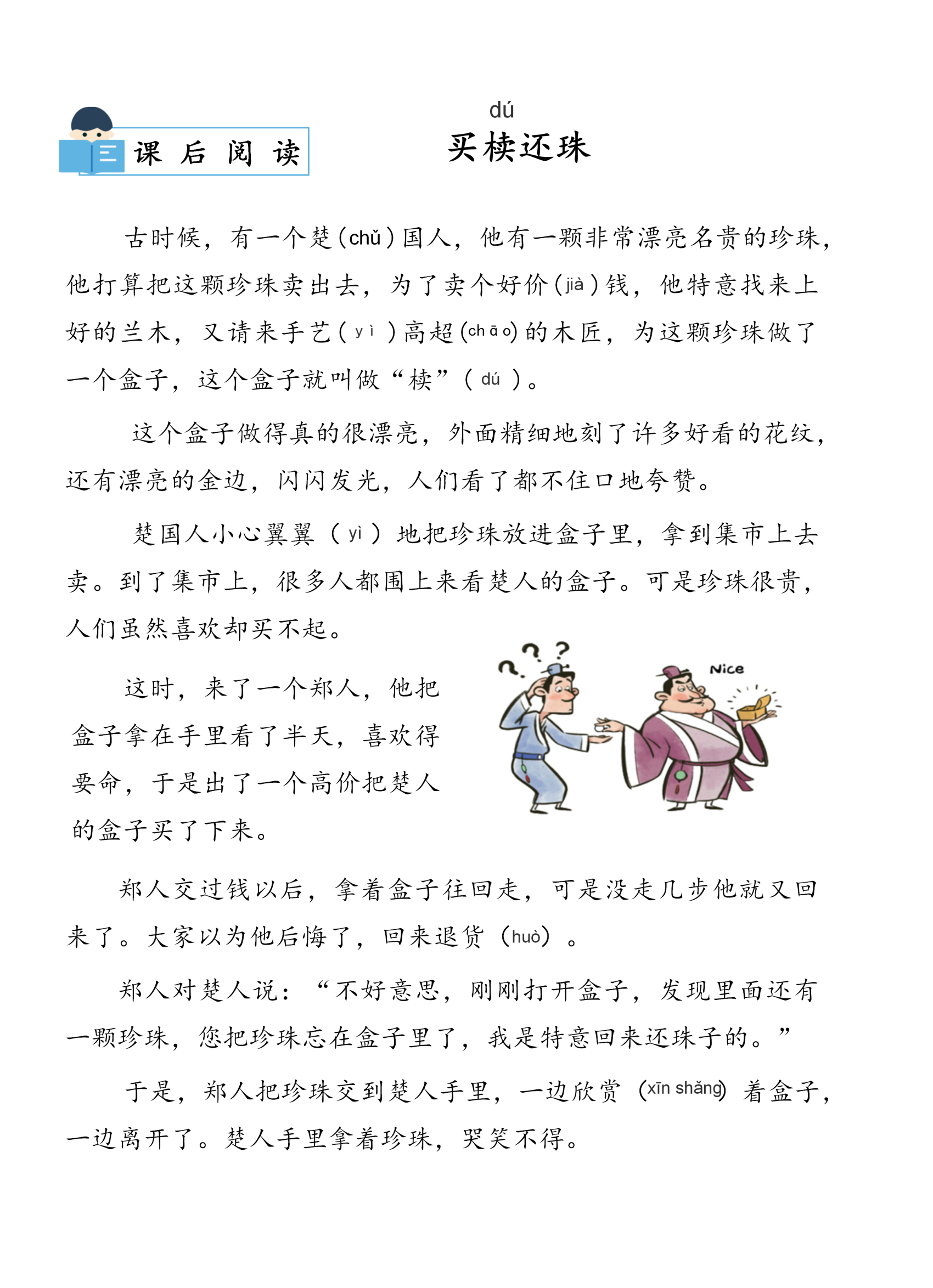
Each core lesson is supported by leveled reading materials written primarily with characters students have already learned. Only a very small number of unfamiliar characters are introduced when they do not prevent overall comprehension.
The purpose is deliberate:
Children should experience the confidence of being able to read Chinese on their own.
That moment is educationally significant.
Once independent reading begins, Chinese learning is no longer limited to the hours a child spends in class each week.
Books, stories, articles, and other Chinese-language materials can become additional sources of language input.
Reading therefore becomes more than an outcome of learning. It becomes a tool that allows children to continue learning independently.
This is why YouGuang does not measure progress simply by asking, “How many characters did the student learn this year?”
A more important question is:
What can the child now do with those characters?
Building Reading Volume and Literacy at the Same Time
Overseas Chinese education often falls into one of two extremes.
Some programs focus heavily on character lists and exercises. Students may memorize many characters but receive too little sustained reading practice.
Other programs rely extensively on picture books, pinyin, illustrations, or adult assistance. Children may appear to read a great deal while never developing the ability to decode Chinese independently.
YouGuang aims to connect these two sides of literacy:
systematic character learning opens the door to reading, and sustained reading reinforces character learning.
Texts in the curriculum therefore serve several purposes at once.
They introduce and reinforce vocabulary, build reading fluency, develop comprehension, strengthen language intuition, and create opportunities for discussion and expression.
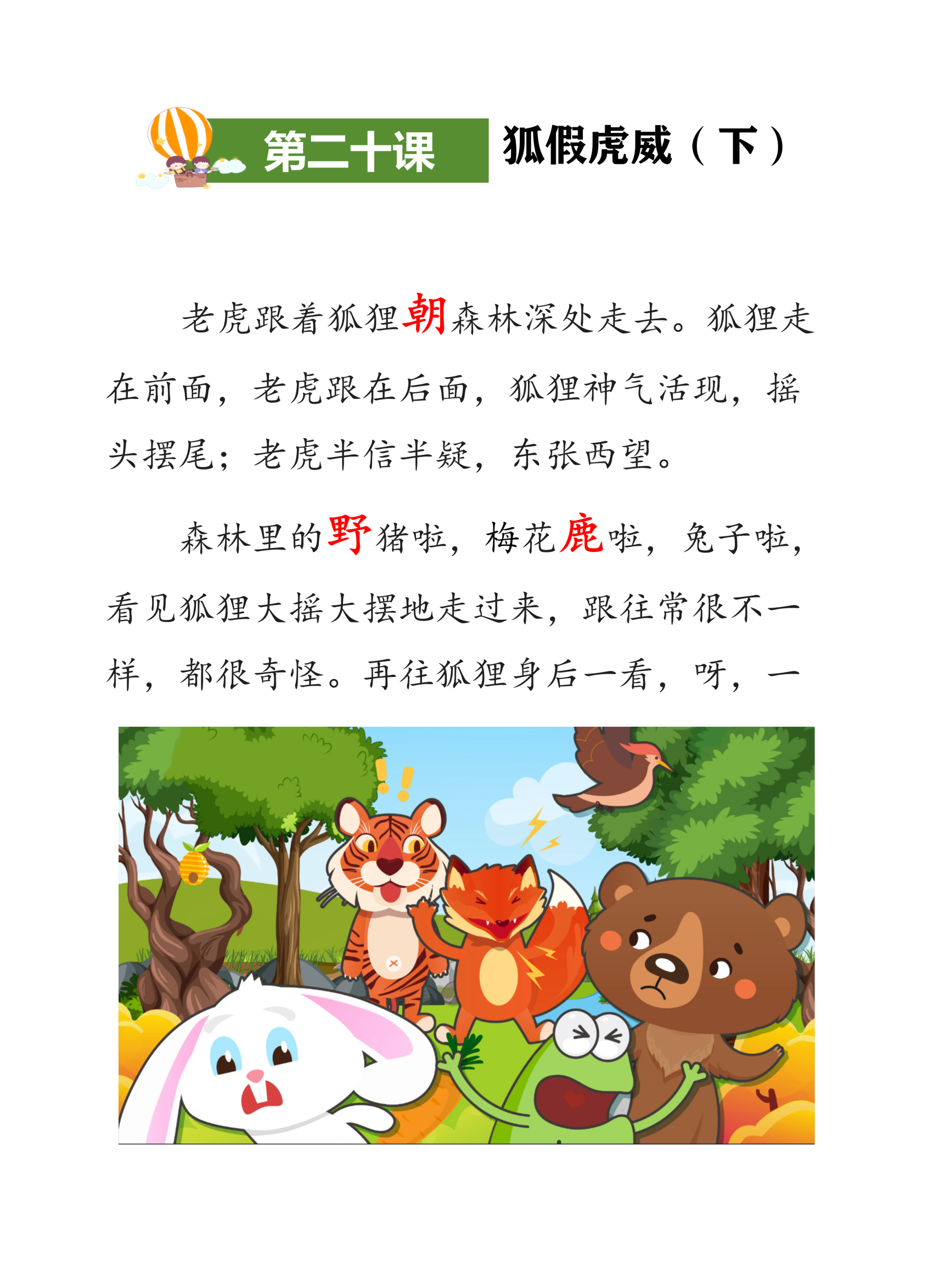
Reading selections draw from a broad range of sources, including Chinese traditions, historical stories, fables, poetry, classic cultural material, contemporary children’s literature, everyday life, and age-appropriate informational texts.
Through reading, students expand not only their vocabulary but also their understanding of the cultural world behind the language.
From Learning Chinese to Using Chinese
Language ultimately exists to be used.
For that reason, YouGuang does not treat listening, speaking, reading, writing, and expression as separate subjects.
They are gradually integrated throughout the curriculum.
Younger students develop oral language through classroom conversations, questions and answers, storytelling, retelling, role-play, songs, and performance.
As students progress, they are expected to describe events more completely, explain ideas, respond to texts, organize thoughts, discuss opinions, and eventually write with increasing independence.
The goal is not simply to produce students who can complete Chinese worksheets.
We want students to be able to:
understand spoken Mandarin,
communicate naturally,
read Chinese independently,
write in Chinese,
and express ideas with clarity, substance, and confidence.
This is also why reading, storytelling, drama, recitation, discussion, and presentation are connected throughout the Youguang learning experience.
Chinese should not exist only inside a textbook.
It should become a language that children can genuinely use.
More Than a Textbook: A Complete Learning System
YouGuang’s in-house curriculum extends beyond the textbook itself.
The learning system is progressively supported by textbooks, workbooks, handwriting practice, leveled reading materials, classroom lesson design, and online assignments.
Each component serves a different purpose.
Classroom instruction focuses on understanding, interaction, and skill development. Workbooks reinforce core concepts. Writing practice develops control and accuracy in written Chinese. Leveled reading expands language exposure. Online assignments help students maintain regular contact with Chinese between weekly lessons.
Together, these components create a continuous learning loop between school and home.
This is especially important for children who attend Mandarin classes only once a week.
An effective overseas Chinese curriculum must consider not only what happens during two hours of class, but also how learning continues after students leave the classroom.
A Curriculum That Continues to Evolve
The value of developing our own curriculum goes beyond having textbooks with the YouGuang name on the cover.
It allows curriculum development to remain closely connected to real classrooms.
Teachers can observe where students struggle, which characters are easily confused, which passages are too difficult, which activities generate stronger language output, and which stories most effectively engage children.
Those observations can return to the curriculum development process.
Materials can then be revised, adjusted, tested, and improved.
For this reason, the YouGuang curriculum is not a fixed product that is written once and left unchanged.
It is a living system that continues to evolve through classroom practice.
The curriculum supports teaching, and teaching continuously improves the curriculum.
That cycle is one of the greatest advantages of an in-house program.
From Two Hours a Week to Years of Lasting Language Development
Learning Chinese abroad is a long-term process.
A strong curriculum should not only answer the question, “How many characters can a child learn this semester?”
It should answer a much larger question:
If a child begins learning Chinese at four or five years old, what will that child be able to do in Chinese at thirteen, fourteen, or fifteen?
YouGuang is building a long-term pathway that moves from early language development to foundational literacy, independent reading, advanced comprehension, writing, and sophisticated expression.
At the upper levels, students continue developing the literacy and language foundation that can support AP Chinese, HSK, and more advanced Chinese study.
But examinations are not the final purpose of the curriculum.
Our greater hope is that years later, when students are no longer sitting in a weekend Chinese classroom, they will still be able to pick up a Chinese book and read it, understand a Chinese article, communicate naturally with family members, and express their own thoughts and feelings in Chinese.
When that happens, Chinese is no longer simply a subject they once studied.
It has become one of their languages.
That is the ultimate purpose of YouGuang’s in-house curriculum:
not simply to help children learn Chinese, but to help them truly own the language.
Risk-Free Enrollment
Cancel anytime and receive a refund for unused tuition, with no cancellation or processing fees.
View the Full Refund Policy >>